
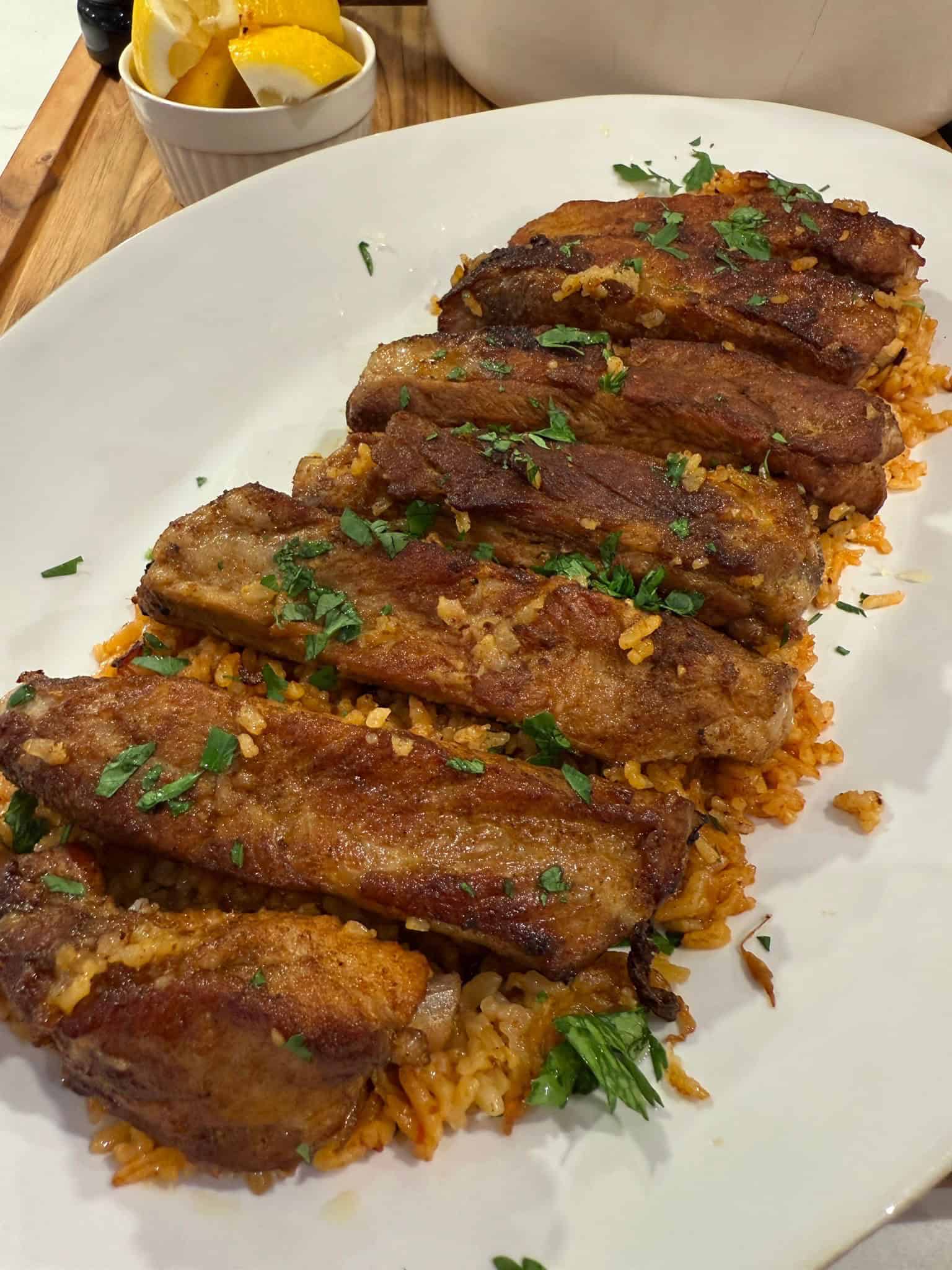
This Portuguese pork ribs recipe with rice, also known as arroz de entrecosto, is the kind of one-pot comfort food I grew up eating. Combined with sautéed veggies and bright white wine, the rice soaks up incredible flavours, becoming irresistibly fluffy, and the ribs stay crisp and golden on the outside while remaining juicy and tender in the centre. Simple to prepare, this dish is the perfect family-friendly comfort food for Sunday dinners!
Jump to:
- What is Arroz de Entrecosto?
- Why You’ll Love This Recipe
- What Kind of Ribs are Best for Arroz de Entrecosto?
- Ingredients and Notes
- How to Make a Baked Pork Ribs Recipe with Rice
- Possible Variations
- My Favourite Ways to Serve
- How to Store, Freeze, and Reheat
- Portuguese Pork Ribs Recipe with Rice
- FAQs
- Can I use beef ribs instead of pork for pork ribs and rice?
- What do I do if my rice is undercooked?
- More Delicious Recipes
What is Arroz de Entrecosto?
Arroz de entrecosto is a traditional Portuguese dish made with pork ribs baked with rice, garlic, onions, and olive oil. The name translates to “rice with pork ribs,” and it’s a classic example of traditional Portuguese recipes, offering simple ingredients, a slow cook time, and big flavour.
Unlike barbecue-style pork ribs, this pork ribs and rice recipe doesn’t require sauce or grilling. Instead, the ribs are seared to lock in moisture and flavour and then roasted in the oven. As a result, they release savoury goodness into the rice, creating a slightly saucy, one-pan meal.
You’ll find versions of arroz de entrecosto all over Portugal, especially in family kitchens, where it’s often made for Sunday lunches or gatherings. Hearty, simple, and satisfying, it’s the kind of recipe that’s meant to be served straight from the baking dish with plenty of bread for soaking up every last spoonful. I don’t blame you if you feel tempted to lick your plate!
Why You’ll Love This Recipe
- One-Pan - All the ingredients combine and cook in one dish, which means less to clean up!
- Family-Friendly - One batch makes a lot with minimal effort, making this recipe perfect for big Sunday meals and easy weeknight dinners.
- Authentic - This pork ribs recipe was passed down by my avó, and offers the rich, savoury flavours classically found in many Portuguese dishes, but don’t worry. All the ingredients are easy to find at local grocery stores, and the steps are simple!
What Kind of Ribs are Best for Arroz de Entrecosto?
Traditional arroz de entrecosto is made with pork spare ribs, often cut into small pieces so they cook evenly and release lots of flavour into the rice. In Portuguese cooking, entrecosto refers to the rib section between the bones, which is perfect for slow baking and soaking into sauces and rice.
For the best results, I recommend using:
- Pork spare ribs - This is the most traditional choice and gives you the richest flavour and juiciest texture.
- Country-style ribs - A great substitute, these are easy to find and stay very tender as they bake.
- Baby back ribs - These work too, though they’re leaner and slightly less flavourful than spare ribs.
Bone-in ribs are always best for this dish, because the bones add extra depth and richness to the rice as everything cooks together. Try to cut the ribs into evenly sized pieces so they cook at the same rate and distribute their flavour throughout the pan.
Ingredients and Notes
Scroll down to the recipe card for the complete ingredient list and instructions!
- Pork Ribs - Pork spare ribs are the most traditional choice for arroz de entrecosto. Cut into small pieces, they become tender as they bake and release rich, savoury flavour into the rice. Country-style ribs or baby back ribs also work well. Look for bone-in pieces for the best taste.
- Rice - Long-grain rice is ideal for this dish because it absorbs the broth and pork juices beautifully without becoming mushy. If you can find Portuguese Carolina rice, that’s the most traditional option, but any long-grain white rice, such as jasmine or basmati, works well, too.
- Onion and Garlic - These form the base of the dish. As they cook down with the ribs and olive oil, they become sweet and savoury and infuse the rice with flavour.
- Tomato - Fresh tomato adds a touch of acidity and helps create a lightly saucy base for the rice, balancing the richness of the pork and olive oil with a touch of brightness.
- White Wine - A splash of dry white wine adds brightness and depth and helps deglaze the pan. It cooks off as the dish bakes, leaving behind a subtle sweet taste. If needed, you can substitute a little extra broth to keep your pork ribs recipe alcohol-free.
- Herbs and Spices - Bay leaf, parsley, and a simple mix of seasoning give this dish its warm, comforting aroma.
- Pimenta Moída - This traditional Portuguese chili seasoning adds gentle heat and depth to the dish. Adjust the amount to your spice preference, or leave it out for a completely mild version.
- Olive Oil - Good Portuguese olive oil is essential here. It keeps the ribs juicy, helps the rice cook evenly, and creates a signature silky sauce that makes this dish so irresistible.
- Chicken Broth - Forms the cooking liquid for the rice and adds extra savoriness as everything bakes together. I recommend using low-sodium broth so you can control the seasoning more easily.
How to Make a Baked Pork Ribs Recipe with Rice
- Brown the ribs. Season the ribs generously with salt, paprika, and white pepper. Then, sear them in oil in a large pot or Dutch oven over medium heat until golden on all sides, and transfer them to a plate.
- Sauté the aromatics. Next, sauté the onion, garlic, and bay leaf until soft. Then, add the tomato (or tomato paste) and pimenta moída, cooking until soft.
- Combine. Add the white wine, bring the liquid to a simmer, and stir in the rice. Then, add the ribs back to the pot, pour in the hot broth, and season to taste.
- Bake. Cover the dish with foil, and bake until the ribs are fully cooked. Remove the foil, and continue to bake until the top of the ribs are crispy and the rice is tender.
- Serve. Rest for a few minutes to let the juices naturally redistribute in the ribs, keeping them moist and juicy. Then, garnish the dish with fresh parsley and lemon slices, and enjoy warm!
Possible Variations
One of the best things about arroz de entrecosto is how easy it is to adapt. Every family has their own version, and this dish welcomes a little creativity. So, feel free to mix and match ingredients to make it your own.
- Add chouriço or linguiça. Sliced Portuguese sausage adds extra smokiness and makes the dish even more flavourful and hearty.
- Make it spicier. Add extra pimenta moída, a pinch of piri-piri, or crushed red pepper flakes if you like more heat.
- Use different vegetables. Bell peppers, peas, carrots, or green beans are all great additions and add color and sweetness to the rice.
My Favourite Ways to Serve
Arroz de entrecosto is best served hot, straight from the oven, when the rice is still saucy, and the ribs are perfectly tender. I love bringing the whole pan to the table and letting everyone serve themselves. It’s the kind of dish that feels meant for sharing. A sprinkle of fresh parsley on top and a little extra drizzle of olive oil is all it really needs.
If you want to add sides, try pairing it with a tomato and onion salad, steamed green beans, and plenty of crusty bread to help soak up any extra sauce. For a truly Portuguese-style meal, serve it with a glass of crisp white wine, and enjoy it slowly with family.
How to Store, Freeze, and Reheat
This pork ribs recipe somehow tastes even better the next day! To store, let the rice and ribs cool completely. Then, transfer them to an airtight container. They’ll stay fresh in the fridge for 3-4 days or in the freezer for up to 2 months.
To serve, thaw frozen ribs in the fridge overnight. Then, warm them covered in the oven at 350°F (177°C) for about 15-20 minutes or just until they’re warmed through. If the rice looks a little dry, add a splash of chicken broth or water before reheating to freshen it back up.
Portuguese Pork Ribs Recipe with Rice
Equipment
- 1 Large skillet or Dutch oven
- 1 *9×13-inch) baking dish
Ingredients
- 2 Tablespoons olive oil
- 1 rack pork ribs cut into individual pieces
- Salt to taste
- 1 Tablespoon paprika
- 1 teaspoon white pepper
- 1 onion chopped
- 2 garlic cloves minced
- 1 bay leaf
- ½ tomato chopped, or 1 Tablespoon tomato paste
- 1 Tablespoon pimenta moída
- ¼ cup dry white wine
- 1½ cups Carolino rice or long-grain white rice
- 3 cups hot chicken broth
- Fresh parsley and lemon wedges for serving
Instructions
- Season the pork ribs generously with salt, paprika, and white pepper. Heat the olive oil in a large skillet over medium heat and brown the ribs on all sides until golden. Remove and set aside.1 rack pork ribs, Salt, 1 Tablespoon paprika, 1 teaspoon white pepper, 2 Tablespoons olive oil
- In the same pan, add the onion, garlic, and bay leaf. Cook until soft and fragrant. Stir in the chopped tomato or tomato paste and the pimenta moída, cooking for another minute.1 onion, 2 garlic cloves, 1 bay leaf, ½ tomato, 1 Tablespoon pimenta moída
- Pour in the white wine and let it simmer for 1-2 minutes to cook off the alcohol. Add the rice, and stir well to coat it in the flavourful base.¼ cup dry white wine, 1½ cups Carolino rice or long-grain white rice
- Return the ribs to the pan, pour in the hot chicken broth, and adjust seasoning with salt if needed.3 cups hot chicken broth
- Transfer everything to a baking dish. Cover tightly with foil and bake at 375°F (190°C) for 30-35 minutes.
- Remove the foil, and return the dish to the oven for another 8-10 minutes, until the ribs are lightly crispy on top and the rice is tender.
- Garnish with fresh parsley and a squeeze of lemon. Serve hot.Fresh parsley and lemon wedges
Notes
FAQs
Can I use beef ribs instead of pork for pork ribs and rice?
Technically, you can, but I don’t recommend it. Traditional arroz de entrecosto is always made with pork ribs, and beef ribs will result in a much different dish. Not only do they have a different flavour, but they’re also large, tougher, and take much longer to cook and become tender, which can cause them to dry out.
What do I do if my rice is undercooked?
If the rice is still firm after baking, simply add a little more hot chicken broth or water to the pan, cover it with foil, and return it to the oven for 5-10 more minutes. Check again, and repeat if needed until the rice is tender and has absorbed the liquid. Then, let the dish rest for a few minutes before serving so the rice can finish steaming and the juices can settle.
Leave a Reply