
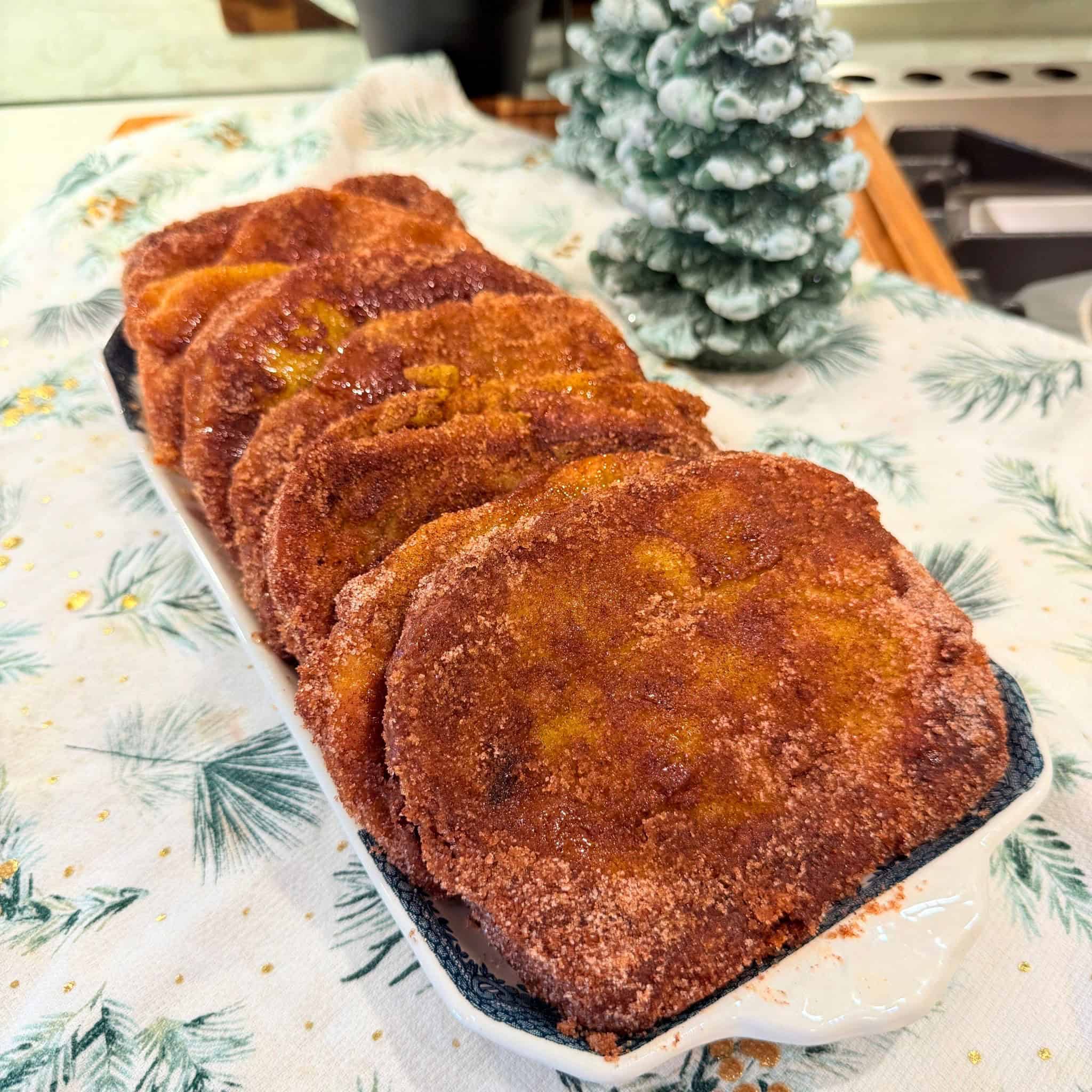
This rabanadas recipe, also known as Portuguese French toast, is crisp on the outside, soft and fluffy in the centre, and infused with sweet, warm, citrusy flavour. A staple on my family’s Christmas table, it’s also found in any padaria (bakery) all year long, because it’s truly just that good!
What are Rabanadas?
Rabanadas are a traditional Portuguese and Brazilian dessert that’s similar to French toast, but richer, sweeter, and always tied to the holidays for me. Growing up, they were a must on our Christmas table! Now, I make them for my family, using thick slices of bread soaked in warm, cinnamon-infused milk, dipped in egg, and fried until golden and crisp.
Unlike everyday French toast, rabanadas are coated in cinnamon sugar and finished with honey or calda de laranja (Portuguese orange syrup), making them feel more like a dessert than a breakfast. Soft and custardy in the centre with a lightly crisp exterior, they’re one of those nostalgic treats you’ll find on family tables and in padarias throughout Portugal and Brazil, especially during the festive season, and my house is no exception!
Ingredients and Notes
Scroll down to the recipe card for the complete ingredient list and instructions!
- Bread - Thick slices of brioche or day-old bread work best for rabanadas. The bread should be sturdy enough to soak up the sweet milk without falling apart, but still soft enough to become custardy in the centre after frying.
- Milk - Whole milk creates the richest flavour and creamiest texture, but any milk will work.
- Sugar - Granulated sugar sweetens the milk mixture and helps create a lightly caramelized exterior when the rabanadas are fried.
- Cinnamon Stick - This infuses the milk with warmth, adding depth to the custard. I don’t recommend using ground cinnamon, because it’s much more pungent and will overwhelm the flavours!
- Lemon Peel - This is what gives rabanadas its signature bright, citrus notes. Be sure to peel only the yellow part of the lemon and avoid the white pith, which can taste bitter.
- Eggs - Lightly beaten eggs coat the soaked bread and help create a golden, crisp exterior once fried.
- Oil - Use a neutral oil with a high smoke point, such as vegetable, canola, or sunflower oil, for frying. The oil should be hot enough to crisp the outside without browning too quickly.
How to Make an Authentic Rabanadas Recipe
- Soak the bread. Whisk the milk, sugar, cinnamon stick, and lemon peel in a pot on the stove, letting it warm over medium heat until hot. Then, dip each bread slice in the milk until soft. They should be fully coated but not so wet they’re soggy or falling apart!
- Dip the bread. Quickly dip each bread slice in a bowl of beaten eggs.
- Cook. Heat oil in a large, deep skillet on the stovetop. Fry the bread on both sides until golden brown, working in batches, if needed, so as not to overcrowd the pan. You want a bit of space between each piece of bread, so they cook evenly!
- Coat the bread. Working quickly, coat the bread pieces in cinnamon sugar, and finish with a drizzle of Portuguese orange honey. Enjoy warm.
My Top Tips & Tricks
- Use slightly stale bread. Day-old bread works best because it absorbs the sweet milk without becoming too soft or falling apart.
- Warm the milk gently. Heat the milk just until hot, not boiling. This helps infuse the cinnamon and lemon flavour without scalding the milk or curdling the eggs later.
- Dip quickly in the eggs. A quick dip is all you need. Too much egg can create a thick coating and mask the delicate flavour of the milk-soaked bread.
- Keep the oil at medium heat. If the oil is too hot, the outside will brown before the inside warms through. If it’s too cool, the rabanadas will absorb too much oil and become greasy.
- Drain well after frying. Transfer the rabanadas to a paper towel-lined plate to remove excess oil before coating them in cinnamon sugar.
- Coat while still warm. Toss the rabanadas in cinnamon sugar or drizzle with honey while they’re hot so the topping sticks beautifully.
My Favourite Ways to Serve
Rabanadas are best enjoyed warm, straight from the pan, when the outside is crisp, and the centre is soft and custardy.
I typically serve them the classic way, generously coated in cinnamon sugar and finished with a drizzle of Portuguese orange honey or calda de laranja. The combination of warm spices and bright citrus is exactly how I grew up eating them, and it never gets old.
However, they’re also delicious with a side of fresh orange slices or berries, a dusting of powdered sugar, or a spoonful of warm honey or maple syrup.
Storage Options
I highly recommend serving your Portuguese French toast while it’s warm. However, if needed, you can transfer leftover rabanadas pieces to an airtight container and store them in the fridge for 3-4 days.
Or, freeze leftovers for up to 2 months. To keep them fresh, arrange the bread pieces in an even layer on a baking sheet, and freeze until solid. Then, transfer them to a freezer-safe container or sealable bag to store. For the best results, leave off the cinnamon sugar and any toppings until just before serving.
When you’re ready to eat, thaw frozen rabanadas in the fridge overnight. Then, reheat the bread pieces in the oven at 350°F (177°C) for 8-10 minutes or in a skillet over medium heat just until warmed through. Toss with cinnamon sugar while warm.
Rabanadas (Portuguese French Toast)
Equipment
- 1 Medium saucepan
- 2 Shallow Bowls
- 1 Large Skillet or Frying Pan
- Tongs or spatula
- Paper towels or wire rack
- 1 Zester or vegetable peeler
Ingredients
- 2 cups whole milk
- ½ cup granulated sugar
- 1 cinnamon stick
- Lemon peel from 1 lemon, yellow part only
- 10-12 sliced Brioche bread sliced thick
- 2 large eggs lightly beaten
- Neutral oil for frying (vegetable or canola)
Toppings:
- Cinnamon sugar to taste
- Portuguese orange honey to taste
Instructions
- In a saucepan over medium heat, warm the milk with the sugar, cinnamon stick, and lemon peel until hot but not boiling. Remove from heat.2 cups whole milk, ½ cup granulated sugar, 1 cinnamon stick, Lemon peel
- Dip the brioche slices into the warm milk mixture until softened but not falling apart.10-12 sliced Brioche bread
- Quickly dip each soaked bread slice into the beaten eggs, coating them lightly.2 large eggs
- Heat oil in a large skillet over medium heat. Fry the bread slices until golden on both sides, working in batches to avoid overcrowding the pan.Neutral oil
- While still warm, coat the rabanadas in cinnamon sugar and drizzle with Portuguese orange honey. Serve immediately.Cinnamon sugar, Portuguese orange honey
Notes
FAQs
Can I bake rabanadas instead of frying them?
Traditional rabanadas are fried, which gives them their signature crisp exterior, but you can bake them if you prefer a lighter version. Arrange them on a greased baking sheet, and bake at 375°F (190°C) until the bread pieces are golden on both sides, flipping once. The texture will be softer, but still delicious.
Can I make rabanadas without eggs?
Yes. While eggs are traditional, you can skip them and simply fry the milk-soaked bread on its own. The outside won’t be quite as crisp, but the inside will still be soft, sweet, and flavourful.
Leave a Reply