
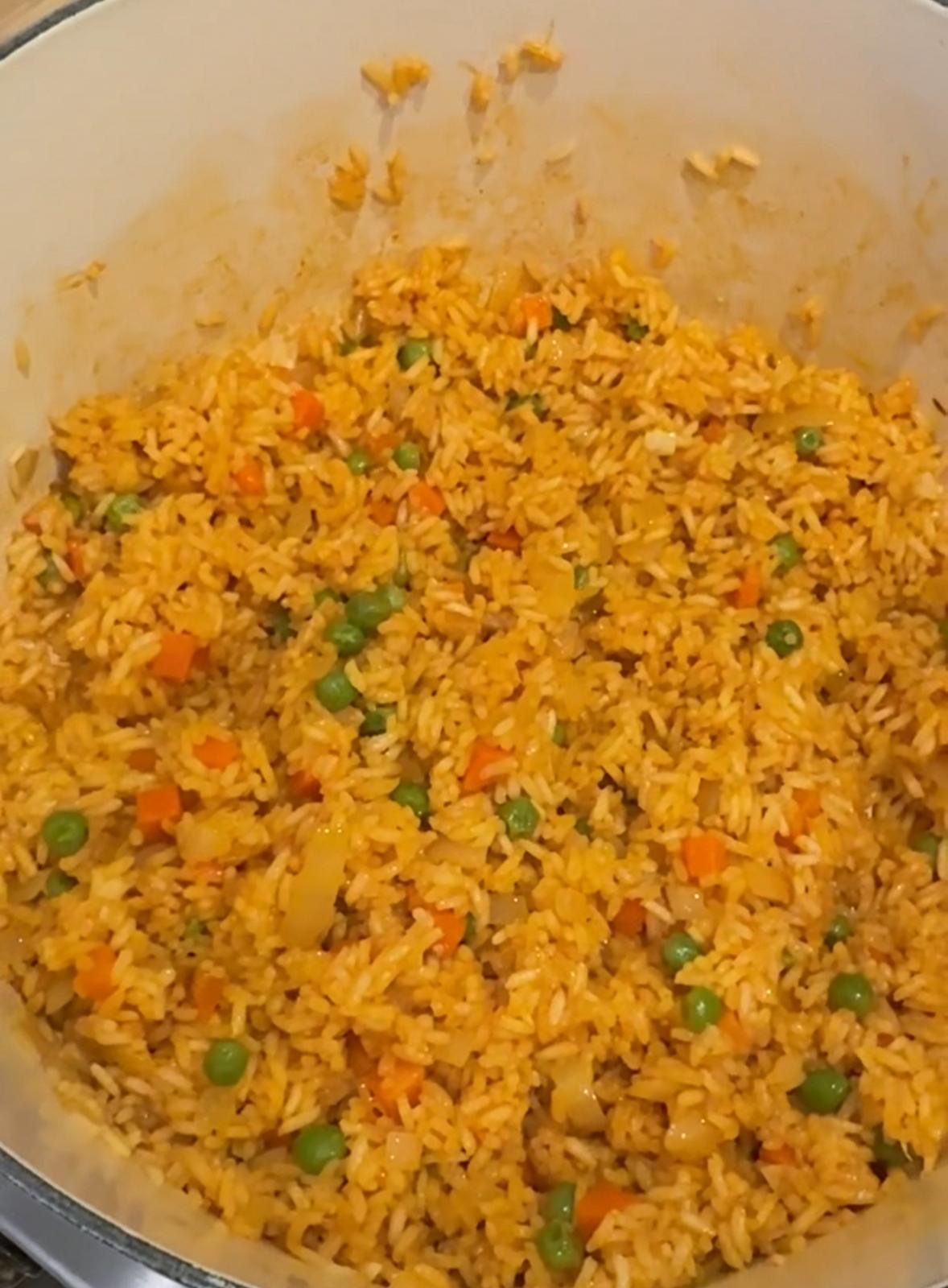
This Portuguese saffron rice recipe was a frequent side dish in my home growing up and is now one I make at least once a week. Golden, fluffy, and buttery, it’s packed with flavour and pairs well with everything from grilled chicken to seafood and roasted meats!
Jump to:
- What is Saffron Rice?
- Ingredients and Notes
- How to Make a Portuguese Saffron Rice Recipe with Veggies
- My Top Tips and Tricks
- My Favourite Ways to Serve
- How to Store and Reheat
- Portuguese Saffron Rice with Peas and Carrots
- FAQs
- Why is my saffron rice sticky?
- Can I add other vegetables?
- More Delicious Recipes
What is Saffron Rice?
Saffron rice is a simple rice dish flavoured and coloured with saffron, which is a spice made from the dried stigmas of the saffron crocus flower. Just a small pinch gives the rice its signature golden colour and delicate, slightly floral taste.
The dish is made throughout the world, particularly in areas like Persia, India, Pakistan, and the Middle East. However, in Portuguese cooking, saffron rice is often served as a side dish alongside grilled meats, chicken, or seafood.
Unlike other varieties, it’s typically cooked with onions, garlic, and broth for extra flavour, sometimes with vegetables like peas and carrots mixed in. The result is light, fluffy rice that adds both colour and aroma to the plate while helping soak up all the delicious sauces from the main dish.
Ingredients and Notes
Scroll down to the recipe card for the complete ingredient list and instructions!
- White Rice - Long-grain rice, such as Basmati rice, works best for this recipe because it cooks up light and fluffy, with each grain staying separate. Rinsing the rice before cooking helps remove excess starch and prevents it from becoming sticky.
- Broth - Chicken broth adds savouriness and makes the rice much more flavourful than cooking it in water alone. Low-sodium broth is a good option so you can better control the seasoning.
- Veggies - Onion and garlic form the base of the dish. Frozen peas and carrots are an easy, classic addition that adds colour and a touch of sweetness. They cook right in the pot with the rice, making the dish simple and convenient.
- Olive Oil and Butter - Olive oil helps sauté the onions and garlic, while butter adds richness and a subtle creaminess that makes the rice extra comforting.
- Seasonings - Saffron gives the rice its signature golden colour and delicate aroma, while bay leaf, salt, and pepper round out the flavour without overpowering the dish.
- Tomato Paste - This is technically optional, but it adds a hint of sweetness and depth while giving the rice a slightly richer colour and flavour that pairs especially well with grilled meats and chicken.
How to Make a Portuguese Saffron Rice Recipe with Veggies
- Sauté the garlic. Heat the olive oil and butter in a large pot or Dutch oven. Cook the onion until soft. Then, add the garlic, and cook until fragrant.
- Combine ingredients. Stir in the rice and tomato paste, and pour in the broth and saffron. Stir to combine, and add the bay leaf, salt, and pepper, followed by the peas and carrots.
- Cook. Cover the pot, and simmer until the rice is fluffy and the liquid is absorbed. Rest the rice for a few minutes. Then, fluff with a rice paddle or fork, and enjoy!
My Top Tips and Tricks
- Rinse the rice before cooking. Washing the rice removes excess starch and helps keep the grains fluffy and separate instead of clumpy and sticky.
- Bloom the saffron in warm broth. Let the saffron threads steep in warm broth for a few minutes before adding them to the pot so their colour and flavour spread evenly through the rice.
- Keep the lid on while cooking. Avoid lifting the lid too often so steam stays trapped and the rice cooks evenly.
- Let the rice rest before fluffing. Resting the rice for about five minutes after cooking allows any remaining moisture to absorb and improves the final texture.
My Favourite Ways to Serve
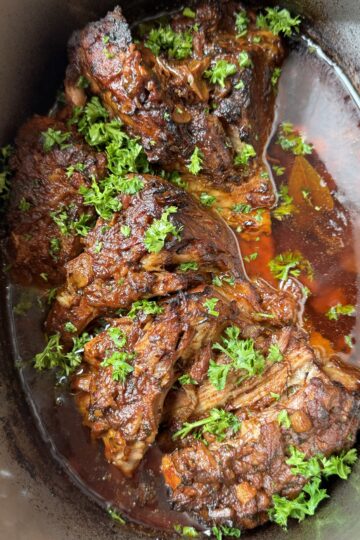
There’s not much this saffron rice doesn’t pair well with! I enjoy it as a side dish with main courses like my Portuguese chicken, filetes de peixe, and Portuguese shrimp. It’s great with saucy dishes, helping to soak up any excess liquid.
How to Store and Reheat
Once cool, transfer leftover saffron rice to an airtight container, and store it in the fridge for up to 4-5 days. Or, freeze leftovers for up to 2 months.
To serve, thaw frozen rice in the fridge overnight. Then, reheat it in a pot on the stovetop over medium heat or in 30-second increments in the microwave, adding a splash of water or broth to rehydrate the rice.
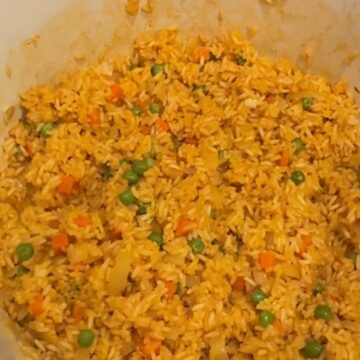
Portuguese Saffron Rice with Peas and Carrots
Equipment
- 1 Medium pot with lid
Ingredients
- 2 Tablespoons olive oil
- 1 Tablespoon butter
- 1 small onion finely chopped
- 2 garlic cloves minced
- 1 cup long-grain rice such as basmati
- 1 Tablespoon tomato paste optional
- 2 cups chicken broth
- Pinch of saffron threads
- 1 bay leaf
- Salt to taste
- Black pepper to taste
- ½ cup frozen peas and carrots
Instructions
- Heat the olive oil and butter in a medium pot over medium heat. Add the onion, and cook until soft and translucent.2 Tablespoons olive oil, 1 Tablespoon butter, 1 small onion
- Stir in the garlic and sauté for about 30 seconds, just until fragrant.2 garlic cloves
- Add the rice and tomato paste (if using), stirring to coat the grains.1 cup long-grain rice, 1 Tablespoon tomato paste
- Pour in the chicken broth and add the saffron, bay leaf, salt, and pepper. Stir to combine.2 cups chicken broth, Pinch of saffron threads, Salt, Black pepper, 1 bay leaf
- Scatter the frozen peas and carrots over the top without stirring.½ cup frozen peas and carrots
- Cover the pot and simmer on low heat for 20-25 minutes, or until the liquid is absorbed and the rice is tender.
- Remove from the heat and let the rice rest, covered, for 5 minutes.
- Fluff gently with a fork, remove the bay leaf, and serve warm.
Notes
FAQs
Why is my saffron rice sticky?
Sticky rice usually means there was excess starch or too much liquid. Rinsing the rice before cooking and using the correct liquid ratio helps keep the grains fluffy.
Can I add other vegetables?
Absolutely. Feel free to use any fresh or frozen veggies you have on hand. Onions, corn, and diced peppers make great additions.
Leave a Reply