
There are some desserts that will always remind me of a Portuguese kitchen, and pudim is definitely one of them. ♥️
Whether it’s a Sunday family lunch, a holiday gathering, or one of those occasions when the whole family is sitting around the table a little longer than usual, there’s a good chance someone has made a pudim.
And with pumpkin season here, I thought, why not give one of our favourite Portuguese desserts a little autumn twist? 🎃
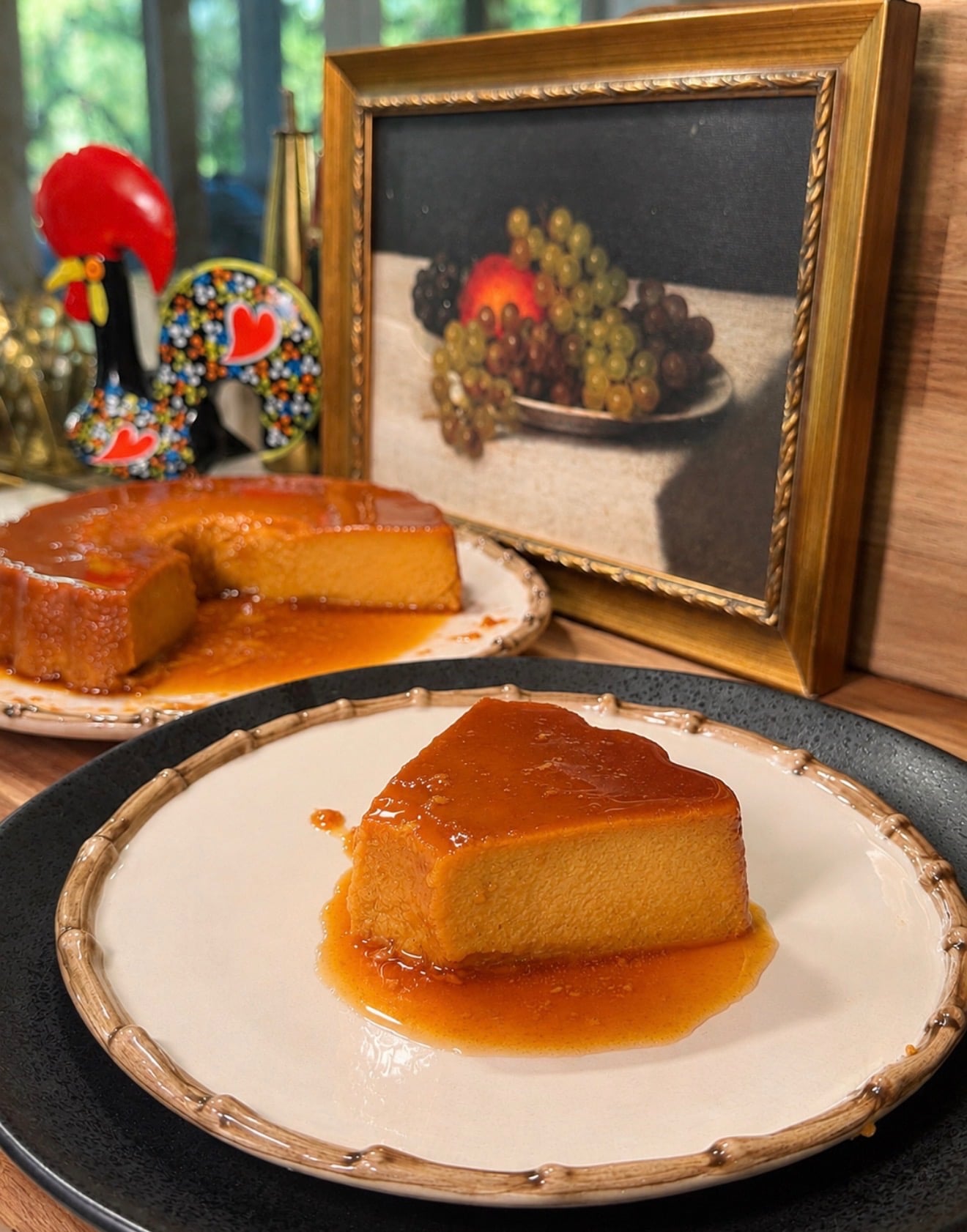
This Pudim de Abóbora à Portuguesa, or Portuguese Pumpkin Flan, is everything I love about a traditional pudim. It’s creamy, smooth, rich, and covered in that beautiful homemade caramel sauce. The pumpkin adds a lovely flavour without overpowering the custard, and just a little cinnamon brings everything together.
The best part? I made this using canned pumpkin purée, so there’s no need to roast, boil, or prepare a whole pumpkin.
And let me tell you, this pudim came out absolutely perfect!
Jump to:
- 🇵🇹 A Little About Pudim in Portugal
- 🎃 Why Pumpkin Works So Well in Portuguese Flan
- ♥️ Why You’ll Love This Pumpkin Flan
- 🥮 Ingredients You’ll Need
- 👩🍳 How to Make Portuguese Pumpkin Flan
- My Tips for the Perfect Pudim de Abóbora
- 🇵🇹 Do You Need a Traditional Portuguese Pudim Mould?
- Frequently Asked Questions
- 🧊 How to Store Portuguese Pumpkin Flan
- 🍂 The Perfect Portuguese Dessert for Autumn
- Pudim de Abóbora à Portuguesa (Portuguese Pumpkin Flan) 🎃🥮
🇵🇹 A Little About Pudim in Portugal
If you grew up in a Portuguese household, you probably know that pudim is one of those desserts that never really goes out of style.
In Portugal, you’ll find different versions of pudim depending on the region, the family, and who’s making it.
There’s the classic pudim flan, the famous Pudim Abade de Priscos, and plenty of family recipes that have been passed down through generations.
Some are made with condensed milk, others with sugar and milk, and some have a little Port wine or citrus added for flavour.
That’s one of the things I love about Portuguese cooking. So many of our recipes have their own little variations, and everyone seems to have a way of making them.
For me, it’s all about keeping those familiar flavours while making recipes that fit into our busy family lives.
And that’s exactly what I wanted to do with this pumpkin version. ♥️
🎃 Why Pumpkin Works So Well in Portuguese Flan
Pumpkin is such a wonderful ingredient to cook and bake with, especially during the autumn months.
In Portuguese cooking, abóbora is used in everything from soups and savoury dishes to traditional sweets like sonhos de abóbora.
Adding pumpkin to pudim gives it a beautiful warm colour, a slightly richer texture, and a delicate earthy sweetness that works so well with caramel.
The cinnamon adds just enough warmth to make this feel like an autumn dessert, without turning it into pumpkin pie.
And although this is a lovely recipe for Thanksgiving or the holidays, I would happily make it any time of the year.
♥️ Why You’ll Love This Pumpkin Flan
Easy to prepare: Everything for the custard comes together in a blender.
Uses canned pumpkin: No peeling, roasting, or boiling pumpkin.
Perfect for making ahead: Pudim is best when it’s had plenty of time to chill.
Beautiful for entertaining: That glossy caramel makes it look like you’ve spent hours in the kitchen.
A Portuguese classic with a seasonal twist: All those familiar pudim flavours with a little autumn inspiration.
🥮 Ingredients You’ll Need
For the Homemade Caramel
1 cup granulated sugar
¼ cup water
For the Pumpkin Custard
1½ cups canned pumpkin purée
1 can (300 mL) sweetened condensed milk
1 cup whole milk
5 large eggs
1 teaspoon vanilla extract
½ teaspoon ground cinnamon
Pinch of salt
1 tablespoon Port wine (optional)
A little note about the pumpkin: Make sure you’re using 100% pure pumpkin purée and not pumpkin pie filling. Pumpkin pie filling already contains added sugar and spices, which will change the flavour of your pudim.
And the Port wine? I added one tablespoon to mine. It’s completely optional, but I love that little Portuguese touch. It adds a subtle depth of flavour without overpowering the pumpkin or caramel. 🇵🇹
👩🍳 How to Make Portuguese Pumpkin Flan
Step 1: Prepare Your Caramel
In a saucepan, combine the sugar and water over medium heat.
Allow the sugar to dissolve and cook until it develops a beautiful golden amber colour. Avoid stirring once it begins boiling. You can gently swirl the saucepan if needed.
Immediately pour the caramel into your Portuguese pudim mould, carefully tilting it to coat the bottom and a little of the sides.
Avó Tip: You can also make the caramel directly in your Portuguese aluminum forma de pudim, which is exactly how I made mine! I added the sugar and water straight into my mould and placed it over the stovetop until the caramel turned golden. Just make sure your mould is suitable for direct stovetop heat, and be extra careful when handling it because the caramel and aluminum get extremely hot.
Be very careful here because hot caramel is extremely hot!
Allow the caramel to settle while you prepare your custard.
Step 2: Make the Pumpkin Custard
Blend the pumpkin purée, sweetened condensed milk, whole milk, eggs, vanilla, cinnamon, salt, and Port wine if using.
Blend until everything is smooth and well combined.
Try not to overblend. We want a beautiful creamy custard without incorporating too much air.
Step 3: Strain the Custard Into Your Pudim Mould
This is one step I definitely recommend not skipping!
Place a fine-mesh sieve directly over your caramel-lined flan mould.
Carefully pour the blended pumpkin custard through the sieve and directly into the mould.
Straining helps remove any little bits of egg or pumpkin fibre, giving the finished pudim a smoother, silkier texture.
I did this with mine, and the texture came out beautifully. ♥️
I used my traditional Portuguese aluminum forma de pudim, the one with the hollow tube in the centre and its own fitted aluminum lid.
The hollow centre helps the custard cook evenly.
Place the oven-safe lid on your mould.
Step 4: Prepare the Banho-Maria
Preheat your oven to 325°F (160°C).
Place the covered pudim mould inside a deep roasting pan.
Carefully add hot water to the roasting pan until it reaches approximately halfway up the outside of your mould.
This is called a banho-maria, or water bath.
It’s such an important step when making pudim because it allows the custard to cook gently and evenly.
Step 5: Bake the Pudim
Place the roasting pan in the oven and bake for approximately 55–75 minutes, depending on your mould and oven.
My pudim took a little over an hour.
You’ll know it’s ready when the custard is set but still has a gentle jiggle.
I also checked mine with a thermometer, you want to aim for approximately 175–180°F.
Step 6: Cool and Refrigerate
Carefully remove the mould from the water bath and allow it to cool.
Transfer to the refrigerator and chill for at least 6 hours, preferably overnight.
As the pudim cools, you may notice that it begins pulling away slightly from the sides of the aluminum mould.
That happened with mine, and it made unmoulding easier!
Step 7: Unmould and Serve
Once your pudim is completely chilled, carefully run a thin knife around the outside edges and the centre tube if needed.
Place a large serving plate with a rim over the mould and carefully flip it over.
Allow the pudim to release onto the plate, letting all that beautiful caramel sauce run down the sides.
And there you have it, a beautiful homemade Portuguese pumpkin pudim! 🎃♥️
My Tips for the Perfect Pudim de Abóbora
Strain your custard. This is one of my favourite little tricks. Pouring the blended custard through a fine-mesh sieve directly into the mould helps give it that beautiful smooth texture.
Don’t overblend the custard. Too much air can cause the pudim to puff up while baking and create little holes in the finished dessert.
Always use a banho-maria. This helps protect the delicate egg custard from direct oven heat.
Use a thermometer if you have one. It’s a helpful way to check that your custard has set without overbaking it.
Let it chill overnight. The extra chilling time helps the pudim firm up and makes it easier to unmould.
Use a plate with a rim. Trust me, you don’t want to lose any of that delicious caramel sauce!
🇵🇹 Do You Need a Traditional Portuguese Pudim Mould?
Not necessarily!
I used a traditional aluminum forma de pudim with a hollow centre and fitted lid.
These moulds are wonderful because they help distribute the heat evenly, and the finished pudim has that beautiful ring shape.
However, you can also use a suitable round baking dish or flan mould.
Just remember that baking times will vary depending on the size, shape, and depth of your pan.
If your mould doesn’t have an oven-safe lid, you can cover it securely with aluminum foil.
Frequently Asked Questions
Can I use canned pumpkin purée?
Absolutely! That’s exactly what I used.
Canned pumpkin makes this recipe so much easier, especially when you want to prepare a dessert without spending extra time roasting and puréeing pumpkin.
Just make sure you’re using pure pumpkin and not pumpkin pie filling.
Do I need to cook the pumpkin custard before baking?
No!
Since we’re using canned pumpkin purée, there’s no need to cook the pumpkin beforehand.
Simply blend your custard ingredients, strain them into the caramel-lined mould, and bake in a water bath.
Do I have to add Port wine?
Not at all!
I added one tablespoon of Port wine to mine because I love that little extra Portuguese touch.
But you can leave it out and still have a delicious pumpkin flan.
Do I really need to strain the custard?
I highly recommend it.
Straining the blended mixture through a fine-mesh sieve helps remove any little bits of egg or pumpkin fibre.
It’s a simple extra step that makes a difference in the finished texture.
Why did my pudim puff up in the oven?
A little puffing can happen as the eggs cook and expand.
Overblending or baking at too high a temperature can also contribute.
My pumpkin pudim developed a slight dome while baking, but as it cooled, it settled and smoothed out beautifully.
Why is my pudim pulling away from the mould?
As the custard cools, it naturally contracts slightly.
A little separation around the sides is normal and can make unmoulding easier.
However, excessive shrinking or watery liquid can sometimes indicate that the custard was overbaked.
Can I make pumpkin flan the day before?
Yes, and I actually recommend it!
Pudim is one of those desserts that’s perfect for making ahead.
I love preparing it the day before a family gathering so there’s one less thing to worry about when everyone comes over.
Can I make this without condensed milk?
Yes, but you would need to adjust the milk and sugar quantities.
This particular recipe was tested with sweetened condensed milk, which gives it a rich, creamy texture.
How do I know when my pumpkin flan is ready?
The custard should be set around the edges with a slight wobble in the centre.
You can also use an instant-read thermometer and aim for approximately 175–180°F in the thickest part.
The pudim will continue to firm up as it cools.
🧊 How to Store Portuguese Pumpkin Flan
Store your pudim covered in the refrigerator for up to 3–4 days.
Keep it chilled until you’re ready to serve.
I don’t recommend freezing it because the custard can become watery or grainy after thawing.
🍂 The Perfect Portuguese Dessert for Autumn
There’s something so lovely about bringing seasonal ingredients into the recipes we grew up with.
Pudim will always be a classic in Portuguese homes, and this pumpkin version is such a nice way to enjoy those familiar flavours during autumn.
Whether you’re making it for a Sunday family lunch, Thanksgiving, or simply because you have a can of pumpkin sitting in the pantry, I think you’ll love this one.
And if you’ve ever been nervous about making pudim, don’t be!
If you make this Pudim de Abóbora à Portuguesa, I’d love to hear how it turned out! Leave me a comment below, and don’t forget to share your creations with me on Instagram.
Pudim de Abóbora à Portuguesa (Portuguese Pumpkin Flan) 🎃🥮
Equipment
Ingredients
- 1 cup granulated sugar
- ¼ cup water
- 1½ cups canned pumpkin purée
- 1 can sweetened condensed milk
- 1 cup whole milk
- 5 large eggs
- 1 teaspoon vanilla extract
- ½ teaspoon ground cinnamon
- 1 pinch salt
- 1 tablespoon Port wine optional
Instructions
- Preheat oven to 325°F (160°C).
- In a saucepan, heat sugar and water over medium heat until golden amber. Carefully pour into the pudim mould and swirl to coat the bottom and sides.You can also make the caramel directly in your Portuguese aluminum forma de pudim, which is exactly how I made mine! I added the sugar and water straight into my mould and placed it over the stovetop until the caramel turned golden. Just make sure your mould is suitable for direct stovetop heat, and be extra careful when handling it because the caramel and aluminum get extremely hot.
- Add pumpkin purée, condensed milk, whole milk, eggs, vanilla, cinnamon, salt, and optional Port wine to a blender. Blend gently until smooth.
- Place a fine-mesh sieve directly over the caramel-lined pudim mould. Pour the blended custard through the sieve into the mould.
- Cover with the oven-safe aluminum lid or foil.
- Place the mould inside a deep roasting pan and add hot water halfway up the outside of the mould.
- Bake for approximately 55–75 minutes, checking for a set custard with a slight wobble. An internal temperature of approximately 175–180°F is a useful guide.
- Carefully remove from the water bath and allow to cool.
- Refrigerate for at least 6 hours or overnight.
- Loosen the edges if necessary, invert onto a rimmed serving plate, and allow the caramel to flow over the pudim.
Notes
Port wine is optional. I used 1 tablespoon in my recipe.
Strain the blended custard directly into the caramel-lined mould for a smoother texture.
Avoid overblending to reduce air bubbles.
Cooking time will vary depending on your mould.
A slight dome during baking can settle as the custard cools.
Chill thoroughly before unmoulding.
Store covered in the refrigerator for up to 3–4 days.


Leave a Reply