
A comforting Portuguese rice recipe made with sweet red bell peppers, garlic, onions, bay leaf and a flavourful chicken broth. Simple ingredients, incredible flavour and a dish the whole family will love! 🇵🇹❤️If there’s one thing we Portuguese know how to do, it’s make a good pot of rice!
Growing up around Portuguese cooking, rice was never just something you threw on the side of your plate. It was always packed with flavour, whether it was made with tomatoes, peppers, seafood or a good homemade broth.
And this Arroz de Pimento Vermelho, or Portuguese Red Pepper Rice, is exactly the kind of recipe I love making for my family.
It’s simple, comforting and made with ingredients most of us already have sitting in our kitchens.
The secret? Taking your time with the onions, garlic and red peppers to build a beautiful flavourful base before adding the rice.
And let me tell you, the results are 1000/10! 😍
Jump to:
- What Is Arroz de Pimento Vermelho?
- Did you know Portugal actually grows its own rice?
- Why You’ll Love This Portuguese Red Pepper Rice ❤️
- How to Get the Perfect Texture for Portuguese Red Pepper Rice
- Ingredients for Portuguese Red Pepper Rice
- How to Make Arroz de Pimento Vermelho
- What Is the Best Rice to Use?
- My Tips for the Best Portuguese Red Pepper Rice 👩🏻🍳
- What to Serve With Portuguese Red Pepper Rice
- Can I Make This Rice Ahead of Time?
- Can I Make This Recipe Vegetarian?
- Frequently Asked Questions
- Avó Tip 👵🏻❤️
- A Little Taste of Portugal at Home 🇵🇹❤️
- Arroz de Pimento Vermelho (Portuguese Red Pepper Rice)
What Is Arroz de Pimento Vermelho?
Arroz de Pimento Vermelho is a Portuguese-style rice dish made with sweet red bell peppers, onions, garlic, olive oil and broth.
The red peppers bring a natural sweetness, while the tomato paste adds richness and gives the rice that beautiful golden-red colour.
Unlike plain steamed rice, this recipe builds flavour from the very beginning.
The rice is lightly toasted with the vegetables before the broth is added, allowing it to absorb all those delicious flavours as it cooks.
I also love finishing mine with a little butter and fresh parsley. The butter is completely optional, but it gives the rice a lovely richness.
Did you know Portugal actually grows its own rice?
One of the most popular varieties used in traditional Portuguese cooking is arroz carolino, a rice known for absorbing flavourful broths while creating a beautiful, slightly creamy consistency.
Unlike long-grain rice, which tends to stay fluffy and separate, Carolino absorbs the flavours of the ingredients it’s cooked with.
That’s why it’s such a wonderful choice for Portuguese dishes like arroz de tomate, arroz de marisco and this arroz de pimento vermelho.
If you can’t find Carolino rice, you can substitute another medium-grain rice, but keep in mind that the amount of broth and cooking time may need adjusting.
Why You’ll Love This Portuguese Red Pepper Rice ❤️
Simple ingredients: Nothing complicated, just everyday pantry staples.
Full of flavour: Sweet peppers, garlic, onions and bay leaf create the most delicious base.
Family-friendly: A comforting side dish that pairs beautifully with almost anything.
Budget-friendly: Rice is one of the easiest ways to make a delicious meal without spending a fortune.
Versatile: Serve it alongside grilled meats, chicken, fish or even enjoy it on its own.
How to Get the Perfect Texture for Portuguese Red Pepper Rice
One thing I love about Portuguese rice dishes is that everyone has their preferred consistency.
Some families love their rice a little more malandrinho, meaning beautifully saucy with a little extra broth, while others prefer a thicker consistency where the rice holds together but the grains remain tender.
For this recipe, I prefer a slightly creamy texture without making the rice overly soupy.
The trick is adding enough chicken stock for the rice to cook through while allowing the grains to absorb all those wonderful flavours from the peppers, garlic and onions.
Always taste your rice before turning off the heat. It should be tender throughout, with a little texture, but never hard or chalky in the centre.
And remember, rice continues absorbing liquid as it sits, so serve it while it’s fresh and warm for the best consistency! ❤️
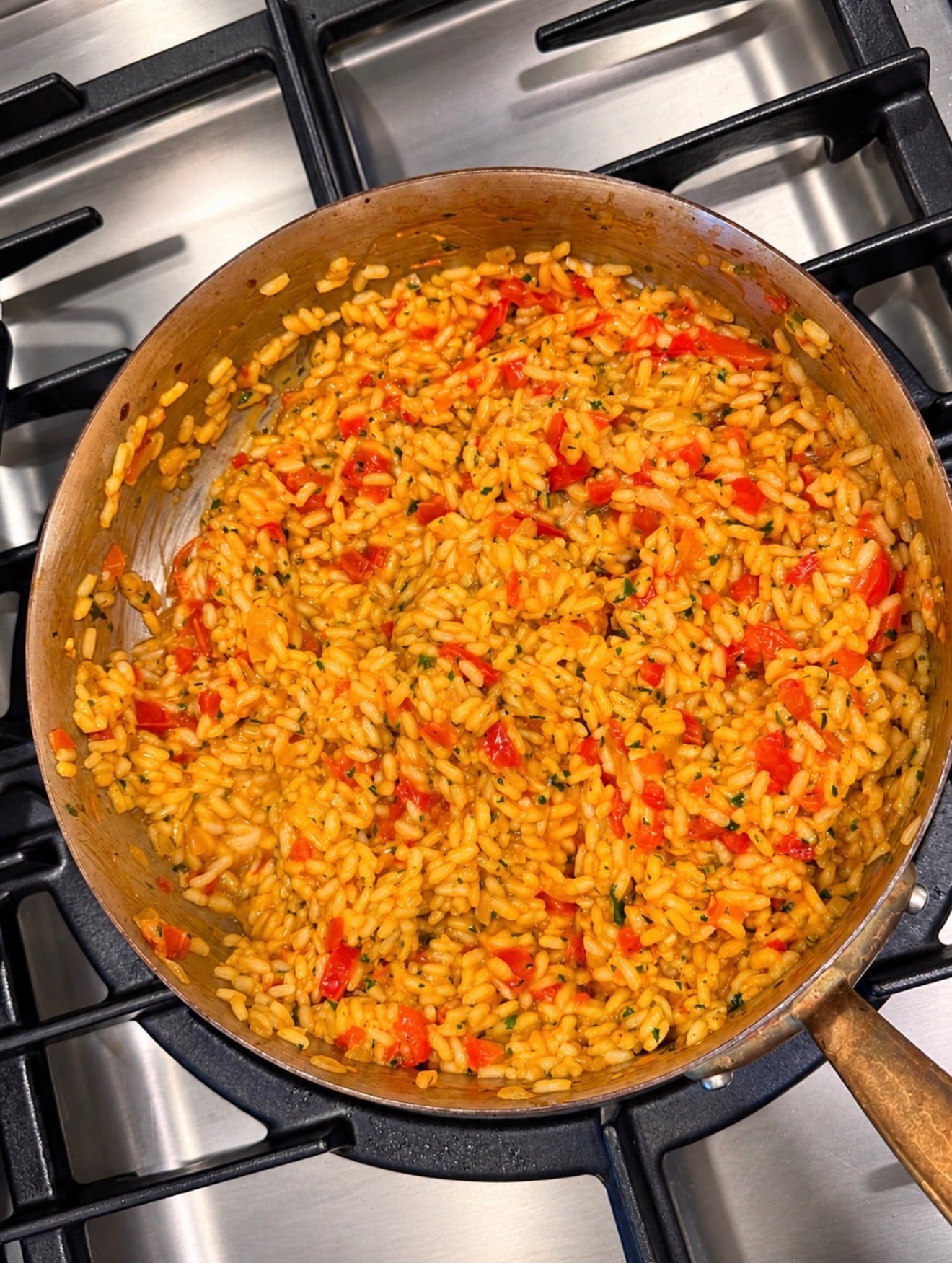
Ingredients for Portuguese Red Pepper Rice
2 tablespoons olive oil
1 medium yellow onion, finely chopped
1 bay leaf
3 garlic cloves, minced
1 large red bell pepper, finely chopped
1 tablespoon tomato paste
1 cups Portuguese Carolino rice
2-3 cups chicken stock, preferably warmed, plus more if needed
Salt, to taste
1 tablespoon butter, optional, for sautéing
1 tablespoon butter, optional, for finishing
2 tablespoons fresh parsley, finely chopped
How to Make Arroz de Pimento Vermelho
Step 1: Slowly soften the onions
In a large pot or deep pan, heat the olive oil over medium-low heat.
Add the finely chopped onion and bay leaf.
Allow the onions to cook slowly until they’re beautifully soft and translucent.
Don’t rush this step!
You want the onions to soften gently without browning too much. This is where we’re starting to build all that delicious flavour.
Step 2: Add the garlic and red peppers
Once the onions are soft, add the minced garlic and stir until fragrant, about 30 seconds.
Add the chopped red bell pepper and the first tablespoon of butter, if using.
Continue cooking over medium-low heat until the peppers soften and release some of their natural sweetness, approximately 5–7 minutes.
The vegetables should be tender and fragrant.
Step 3: Stir in the tomato paste
Add 1 tablespoon of tomato paste.
Stir everything together, allowing the tomato paste to cook for about 1 minute.
This helps develop a deeper flavour and coats the vegetables in that beautiful rich colour.
Step 4: Toast the rice
Add the Portuguese rice directly into the pot.
Stir gently, coating the grains with the olive oil, vegetables and tomato paste.
Allow the rice to toast for approximately 1–2 minutes, stirring to prevent sticking.
This little step adds another layer of flavour before we introduce the broth.
Step 5: Add the chicken stock
Pour in 2-3 cups of warm chicken stock and stir gently.
Season with salt to taste, keeping in mind that some chicken stocks are already salted.
Bring everything to a boil.
Once boiling, reduce the heat to low or medium-low with the lid closed and allow the rice to simmer gently.
Cook for approximately 15–20 minutes, checking regularly, until the rice is tender.
Add more warm stock as needed if the rice begins drying out before it’s fully cooked.
You want the rice beautifully tender, with the grains still holding their shape.
Step 6: Finish with butter and parsley
When the rice is almost completely cooked, stir in the remaining tablespoon of butter, if using.
This gives the rice a beautiful finish and a little extra richness.
Once the rice is cooked to your liking, remove the bay leaf and turn off the heat.
Finish with freshly chopped parsley.
Give everything one final gentle stir and serve warm.
Bom apetite! 🇵🇹❤️
What Is the Best Rice to Use?
For this recipe, I recommend Portuguese Carolino rice.
Carolino is a traditional Portuguese rice variety known for its ability to absorb flavourful broths and sauces.
It’s particularly popular in dishes like arroz de tomate, arroz de marisco and other comforting Portuguese rice recipes.
Carolino gives you a lovely tender texture while allowing the rice to soak up all the flavours from the red peppers, garlic and chicken stock.
If you prefer a rice that stays more separate and fluffy, Portuguese arroz agulha is another option, although you’ll need to adjust the liquid and cooking time.
For this particular recipe, I love the texture and flavour absorption of Carolino.
My Tips for the Best Portuguese Red Pepper Rice 👩🏻🍳
- Don’t rush your onions.
I always say that a good Portuguese dish starts with a good refogado.
Allowing your onions to soften slowly in olive oil creates a beautiful foundation for the entire dish. - Use fresh red bell peppers.
Red bell peppers are naturally sweeter than green peppers, making them perfect for this recipe. - Toast your rice.
Stirring the rice into the vegetable mixture before adding the broth helps coat every grain with flavour. - Use a flavourful chicken stock.
Since rice absorbs so much liquid, the stock makes a big difference in the final flavour. - Add butter if you like a richer finish.
I used butter twice in this recipe, once while cooking the vegetables and again just before the rice was finished.
Both additions are optional, but I love the extra richness they bring. - Taste your rice before serving.
Different varieties of rice absorb liquid differently.
Always taste a few grains to make sure they’re tender and cooked through before removing the pot from the heat.
What to Serve With Portuguese Red Pepper Rice
This is one of those side dishes that goes with just about everything!
Some of my favourite ways to serve it include:
Portuguese grilled chicken (Frango Grelhado)
Bifanas or Portuguese pork cutlets
Portuguese steak (Bife à Portuguesa)
Oven-roasted chicken
Can I Make This Rice Ahead of Time?
Absolutely!
You can prepare this rice ahead of time and store it in an airtight container in the refrigerator for up to 3–4 days, provided it is cooled promptly and refrigerated within 1 hour.
When reheating, add a small splash of chicken stock or water to help restore moisture.
Heat until steaming hot throughout.
Rice should not be left sitting at room temperature for extended periods because improperly stored cooked rice can develop harmful bacteria.
Can I Make This Recipe Vegetarian?
Yes!
Simply replace the chicken stock with vegetable stock.
The onions, garlic, red peppers and tomato paste already create so much flavour that this recipe works beautifully without chicken broth.
For a vegan version, omit the butter or replace it with a plant-based alternative.
Frequently Asked Questions
Can I use long-grain rice instead of Carolino?
Yes, but the texture will be different. Long-grain rice tends to remain fluffier and more separate. Adjust the stock quantity and cooking time according to the rice you’re using.
Do I need to rinse the rice?
For a traditional saucier Portuguese rice dish, I generally prefer not to rinse Carolino rice because its surface starch helps create a lovely consistency.
Can I use green peppers instead?
You can, but red bell peppers have a sweeter flavour. Green peppers will give the rice a slightly more earthy and bitter taste.
Is the butter necessary?
Not at all! The olive oil provides plenty of flavour. The butter is simply an optional addition for extra richness.
Can I add protein directly to the rice?
Absolutely! Cooked chicken, shrimp or even pieces of Portuguese chouriço would make delicious additions. Just make sure any added protein is cooked safely.
Avó Tip 👵🏻❤️
If there’s one thing I’ve learned about Portuguese cooking, it’s that a good refogado makes all the difference!
Don’t rush your onions. Let them slowly soften in olive oil with a bay leaf before adding your garlic and peppers. This simple step builds so much flavour and is what makes even the most basic Portuguese dishes taste incredible.
And don’t forget to taste your rice as it cooks! A little extra broth can always be added, but you want those grains beautifully tender without becoming mushy.
A Little Taste of Portugal at Home 🇵🇹❤️
One of the things I love most about Portuguese cooking is how we can take the simplest ingredients and turn them into something so comforting.
A little olive oil, onion, garlic, peppers and rice. That’s really all it takes to create something delicious.
This Arroz de Pimento Vermelho is the kind of recipe I want my children to grow up enjoying.
Nothing overly complicated. Just real food, made with love, and full of the flavours that remind us of home.
If you make this recipe, I’d love to hear what you think!
Don’t forget to follow along on Instagram @rainha_da_cozinha for more Portuguese recipes, family favourites and a little taste of Portugal in your kitchen.
Bom apetite! ❤️🇵🇹

Arroz de Pimento Vermelho (Portuguese Red Pepper Rice)
Ingredients
- 2 tablespoons olive oil
- 1 medium yellow onion finely chopped
- 1 bay leaf
- 3 garlic cloves minced
- 1 large red bell pepper finely chopped
- 1 tablespoon butter optional, for sautéing
- 1 tablespoon tomato paste
- 1 cup Portuguese Carolino rice uncooked
- 2-3 cups chicken stock warmed, plus additional as needed
- Salt to taste
- 1 tablespoon butter optional, for finishing
- 2 tablespoons fresh parsley finely chopped
Instructions
- Prepare the refogado.
- Heat the olive oil in a large pan or pot over medium-low heat. Add the chopped onion and bay leaf. Cook slowly for approximately 5–7 minutes until the onions are beautifully soft and translucent, without browning.
- Add the garlic and red pepper.
- Stir in the minced garlic and cook for approximately 30 seconds until fragrant. Add the chopped red bell pepper and 1 tablespoon of butter, if using. Continue sautéing for 5–7 minutes until the peppers have softened.
- Add the tomato paste.
- Stir in 1 tablespoon of tomato paste and allow it to cook for approximately 1 minute, coating the vegetables and developing a rich flavour.
- Toast the rice.
- Add the uncooked rice directly to the pan. Stir gently for 1–2 minutes, allowing the grains to toast lightly and absorb the flavours of the refogado.
- Add the chicken stock.
- Pour in 2-3 cups of warm chicken stock and season with salt to taste. Stir gently and bring everything to a boil.
- Simmer until tender.
- Reduce the heat to low or medium-low, cover and allow the rice to simmer gently for approximately 15–20 minutes, stirring occasionally to prevent sticking. Add additional warm stock as needed until the rice is cooked through and reaches your preferred consistency.
- Finish with butter.
- When the rice is almost completely cooked, stir in the remaining tablespoon of butter, if using. Allow it to melt into the rice for a beautiful, rich finish.
- Garnish with and serve.
- Remove the bay leaf, turn off the heat and finish with freshly chopped parsley. Give everything a gentle stir and serve warm.
- Bom apetite! 🇵🇹❤️



Leave a Reply