
Frango Guisado com Ervilhas, Chouriço, Batatas e Ovos
If there’s one thing we Portuguese know how to do, it’s turn the simplest ingredients into the most comforting meals! 🇵🇹♥️
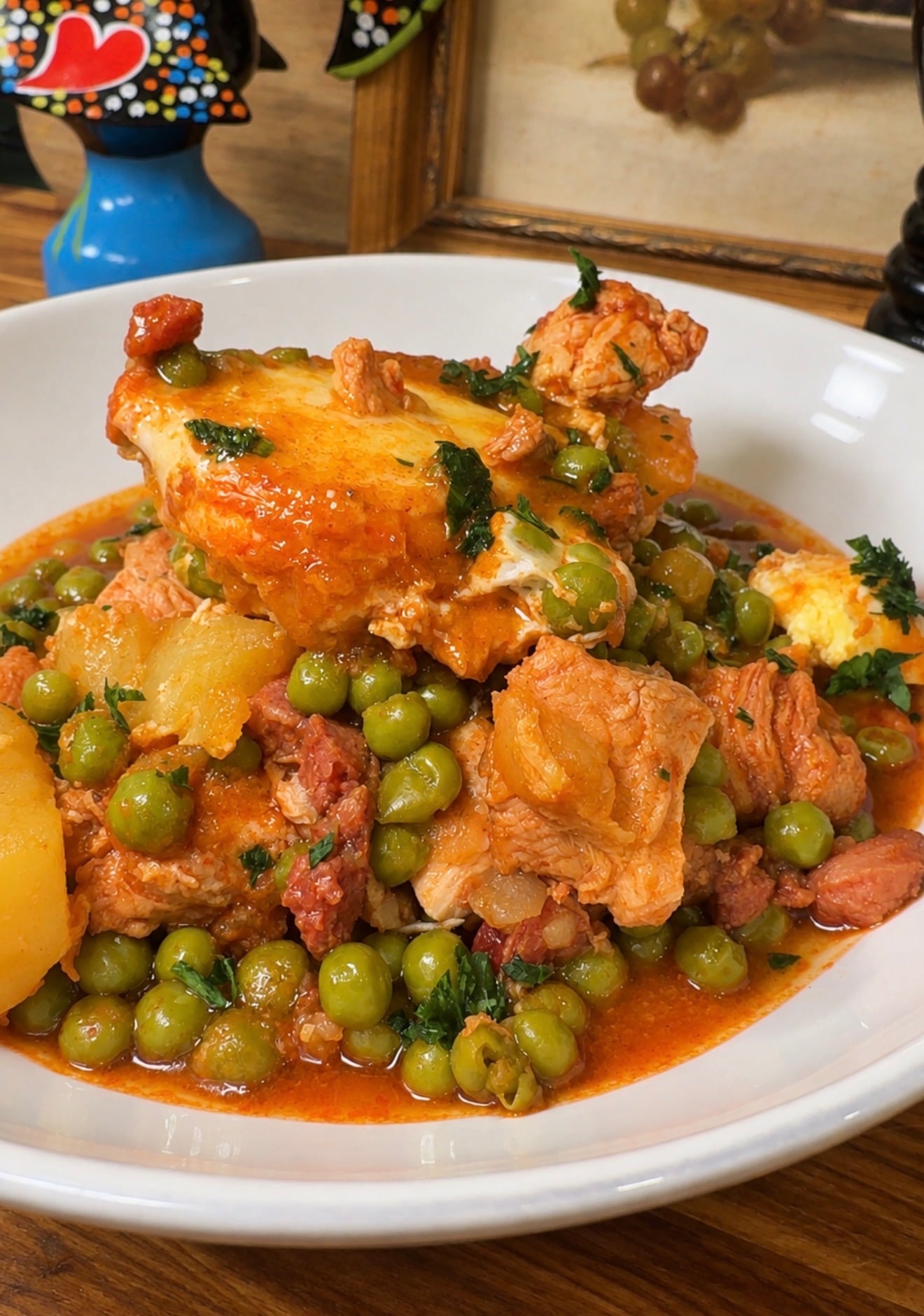
This Portuguese chicken stew is everything I love about our home cooking. Tender pieces of chicken, smoky chouriço, soft potatoes, sweet ervilhas (peas) and perfectly poached eggs, all simmered in a rich, flavourful molho. And you already know, if there’s no bay leaf in the pot, I don’t trust it! 😂🌿
Growing up, these were the kinds of meals that filled our homes. Nothing fancy, nothing complicated. Just a good refogado, a pot simmering away on the stove and the kind of food that had everyone reaching for another piece of pão to soak up that molho. 🤤
And that’s exactly why I love sharing recipes like this. As a busy mom, I want to keep those Portuguese traditions alive without spending hours in the kitchen. Because sometimes the simplest meals bring back the biggest saudades. ♥️
Jump to:
- Frango Guisado com Ervilhas, Chouriço, Batatas e Ovos
- What Is Frango Guisado com Ervilhas? 🇵🇹
- Why You’ll Love This Portuguese Chicken Stew ♥️
- Ingredients You’ll Need 🧄🌿
- How to Make Portuguese Chicken Stew with Peas and Potatoes 🍲
- My Avó Tips for the Best Frango Guisado 👵🏼♥️
- Substitutions and Variations 🔄
- How to Get That Perfect Portuguese Molho 🤤
- What to Serve with Portuguese Chicken Stew 🍽️
- How to Store, Freeze and Reheat ❄️
- Frequently Asked Questions ❓
- More Portuguese Recipes You’ll Love 🇵🇹♥️
- From My Cozinha to Yours ♥️
- Portuguese Chicken Stew with Peas, Potatoes & Chouriço 🇵🇹♥️
What Is Frango Guisado com Ervilhas? 🇵🇹
Frango guisado translates to stewed chicken, and ervilhas means peas.
It’s a variation of the traditional Portuguese guisados that have been made in family kitchens for generations. A good guisado begins with a refogado, typically made with olive oil, onion, garlic and bay leaf, followed by meat, vegetables and enough liquid to create a delicious molho.
Every Portuguese family has its own way of making this dish, and that’s the beauty of our cooking! Some use fresh tomatoes, others tomato paste. Some add chouriço, while others keep it simple.
And if you grew up eating ervilhas com ovos, you already know how delicious those eggs are when they’re gently cooked right in the molho! 😍
For my version, I use chicken breast, Portuguese chouriço, potatoes, plenty of ervilhas and a good spoonful of pimenta moída. The chouriço gives the sauce that beautiful smoky flavour, while the potatoes help thicken everything naturally.
And the best part? It’s all made in one pot! Less cleanup, more flavour and a proper Portuguese family dinner on the table. 🙌🏼
Why You’ll Love This Portuguese Chicken Stew ♥️
There are so many reasons this recipe deserves a place in your weekly dinner rotation!
One-pot dinner 🍲: Everything cooks together, which means fewer dishes to wash.
Simple ingredients 🧄: Nothing complicated or difficult to find, especially if you already keep Portuguese staples in your pantry.
Full of flavour 🇵🇹: The refogado, chouriço, pimenta moída and bay leaves create a beautiful savoury molho.
Family-friendly ♥️: Chicken, potatoes and peas make this a hearty, satisfying dinner.
Great for leftovers 🥘: The flavours continue to develop, making this a wonderful meal to enjoy the next day.
Ingredients You’ll Need 🧄🌿
A good Portuguese meal doesn’t need a long list of fancy ingredients. It’s all about how you bring those ingredients together.
Chicken breast
I use 2 lbs of boneless, skinless chicken breast, cut into medium-sized pieces.
I recommend seasoning the chicken with salt and white pepper before adding it to the pot. This gives the chicken flavour from the beginning rather than relying entirely on the molho.
You can also use boneless chicken thighs if you prefer a juicier cut of meat.
Portuguese chouriço
Two links of Portuguese chouriço add that delicious smoky, savoury flavour we all love! 🇵🇹
As the chouriço cooks in the refogado, it releases its seasoned oils, giving the molho a beautiful colour and richness.
Potatoes 🥔
Five medium potatoes make this a complete, filling meal.
I prefer Yukon Gold or another all-purpose potato because they hold their shape while releasing just enough starch to help thicken the molho.
Green peas (ervilhas)
Four cups of frozen green peas add a little sweetness that balances the savoury chouriço and tomato paste.
No need to thaw them beforehand!
Onion, garlic and bay leaves 🧅
This is where the magic begins, minha gente!
One large onion, 3–4 cloves of garlic and two bay leaves create the base of our refogado.
Take your time softening the onions because a good refogado makes all the difference.
Tomato paste 🍅
I use 3 tablespoons of tomato paste instead of fresh tomatoes.
It gives the molho a concentrated tomato flavour and a rich colour without adding too much liquid.
Portuguese pimenta moída 🌶️
One tablespoon of Portuguese pimenta moída adds a beautiful depth of flavour.
Depending on the variety you’re using, it can be mild or spicy, so adjust to your preference.
Sweet paprika (colorau)
One teaspoon of sweet paprika adds colour and a subtle, earthy flavour.
Chicken broth
I use approximately 3 cups of chicken broth, adding more only if needed.
You can absolutely substitute water. The refogado and chouriço already bring plenty of flavour to the dish.
Eggs 🥚
Four eggs finish the stew beautifully!
You can poach them directly in the pot or cook them separately if you prefer more control over the consistency.
How to Make Portuguese Chicken Stew with Peas and Potatoes 🍲
This recipe is all about building flavour in stages. Once you’ve prepared your ingredients, everything comes together in one pot!
Step 1: Season the chicken
Cut 2 lbs of boneless chicken breast into medium-sized pieces, approximately 1½–2 inches.
Season with ½ teaspoon salt and ¼ teaspoon white pepper, tossing well to coat.
Set aside while preparing your refogado.
Rainha Tip ♥️: Seasoning the chicken before cooking makes a difference, especially with chicken breast. You want flavour in every bite!
Step 2: Start your refogado 🧅🌿
In a large heavy-bottomed pot, heat 3 tablespoons of olive oil over medium heat.
Add one finely chopped large onion and two bay leaves.
Cook for approximately 5–7 minutes, stirring occasionally, until the onion becomes soft and translucent.
Add 3–4 minced garlic cloves and cook for another minute.
Step 3: Add the tomato paste and pimenta moída 🌶️
Stir in 3 tablespoons of tomato paste and 1 tablespoon of pimenta moída.
Cook for approximately 2 minutes, stirring frequently so everything combines with the onion and garlic.
The tomato paste will deepen in colour and begin forming the base of your molho.
Step 4: Add the chouriço and paprika 🇵🇹
Add two sliced links of Portuguese chouriço.
Cook for approximately 3–4 minutes, allowing the chouriço to release its flavour into the refogado.
Add 1 teaspoon of sweet paprika (colorau) and stir for another 30 seconds.
At this point, your cozinha should already be smelling incredible! 🤤
Step 5: Add the chicken
Add your seasoned chicken breast to the pot.
Stir gently, coating the chicken in the beautiful refogado.
Cook for approximately 3–4 minutes, turning the chicken occasionally.
The chicken doesn’t need to be fully cooked yet, as it will continue cooking with the potatoes.
Step 6: Add the chicken broth and potatoes 🥔
Pour in approximately 3 cups of chicken broth.
Add five peeled potatoes, cut into medium-sized chunks.
The liquid should come close to the top of the potatoes without completely covering them.
If necessary, add a little more broth.
Bring to a gentle simmer, cover and cook for approximately 12–15 minutes, until the potatoes are beginning to soften.
Step 7: Add the ervilhas
Add 4 cups of frozen green peas directly into the pot.
Gently stir to combine.
The liquid should reach close to the top of the peas, but they don’t need to be completely submerged.
Cover and simmer for another 5–8 minutes, until the peas are tender, the potatoes are fork-tender and the chicken reaches 165°F (74°C).
Avó Tip 👵🏼: Don’t add too much liquid! You want a beautiful, rich molho, not a soup. The potatoes will naturally release starch and help thicken the sauce.
Step 8: Add the eggs 🥚
Once the chicken, potatoes and peas are cooked, make four small spaces in the stew using a spoon.
Carefully crack an egg into each space.
Cover and simmer gently for approximately 4–7 minutes, depending on how you prefer your eggs.
Alternatively, you can poach the eggs separately and place them on top of the stew when serving. I actually prefer this method when I want the whites and yolks to cook more evenly.
Step 9: Finish and serve ♥️
Taste the molho and adjust the salt and white pepper if needed. Garnish with Parsley (optional).
If you’d like a slightly thicker sauce, gently mash one or two pieces of cooked potato into the molho.
Let the stew rest for approximately 5 minutes before serving.
Serve warm with plenty of molho and fresh Portuguese bread!
Bom apetite, minha gente! 🇵🇹♥️
My Avó Tips for the Best Frango Guisado 👵🏼♥️
A few little things can make all the difference when preparing this traditional Portuguese chicken stew.
- Don’t rush the refogado. Give your onions enough time to soften. The refogado is the foundation of so many Portuguese recipes, and building that flavour from the beginning makes a difference.
- Season the chicken before adding it. Chicken breast is naturally lean, so seasoning it beforehand helps ensure it doesn’t taste bland.
- Keep the chicken pieces fairly large. Smaller pieces of chicken breast cook quickly and can become dry. Medium-sized pieces work better for this stew.
- Don’t drown your potatoes and peas. Add enough broth to nearly cover the potatoes, then let everything simmer gently. You can always add a little more liquid if needed.
- Let the potatoes thicken the molho. If you prefer a thicker guisado, mash one or two cooked potato pieces into the sauce rather than adding flour.
- Poach the eggs separately if you prefer. This gives you more control over the whites and yolks, especially if everyone in your family likes their eggs cooked differently.
Substitutions and Variations 🔄
Chicken thighs instead of chicken breast
You can absolutely substitute boneless, skinless chicken thighs for the chicken breast.
Chicken thighs contain more fat and are more forgiving during simmering, making them a wonderful option for a juicy, tender guisado.
Use the same quantity and adjust cooking time as needed.
Can I make this Portuguese stew in a pressure cooker?
Yes! 🇵🇹 Pressure cookers are a familiar part of many Portuguese home kitchens, especially when preparing stews and other comforting family meals.
For an electric pressure cooker, prepare the refogado using the sauté function, following the same order of ingredients.
Add the chicken and enough broth to satisfy your cooker’s minimum liquid requirement.
For boneless chicken thighs, cook on high pressure for approximately 5–6 minutes, then release pressure according to your appliance’s instructions.
Add the potatoes afterward and simmer on sauté mode until nearly tender. Add the peas during the final 5–8 minutes and poach the eggs at the end.
I recommend cooking the potatoes and peas without pressure so they don’t become overly soft.
Can I make it without chouriço?
Of course! The chouriço adds a wonderful smoky flavour, but you can leave it out.
You may want to add a little extra sweet paprika to compensate.
Can I use water instead of chicken broth?
Absolutely!
Water is a perfectly good option. The onion, garlic, bay leaves, chouriço, tomato paste and pimenta moída will create a delicious, flavourful base.
Can I add more vegetables?
Yes! You can add carrots, diced bell peppers or other vegetables your family enjoys.
Just remember that additional vegetables may affect the cooking time and amount of liquid needed.
How to Get That Perfect Portuguese Molho 🤤
Let’s talk about the molho because, we all know that’s one of the best parts!
A good Portuguese guisado should have enough sauce to coat the chicken, potatoes and peas generously.
You want it rich and slightly thickened, but not dry or overly watery.
The trick is to add your broth gradually.
Start with approximately 3 cups and only add more if needed.
As the potatoes cook, they’ll naturally release starch into the sauce.
If you want an even thicker consistency, mash one or two cooked potato chunks and stir them into the molho.
You can also let the stew simmer uncovered for a few minutes before adding the eggs.
And don’t forget the pão! There’s nothing better than a piece of Portuguese bread soaking up that beautiful molho. ♥️
What to Serve with Portuguese Chicken Stew 🍽️
This is one of those meals that really doesn’t need much else.
You’ve already got your protein, potatoes, vegetables and eggs all in one pot!
But if you want to make it a proper Portuguese family dinner, here’s what I recommend.
Portuguese bread 🥖: My absolute favourite! Perfect for soaking up the molho.
Simple green salad 🥗: A fresh salad with olive oil and vinegar balances the richness of the stew.
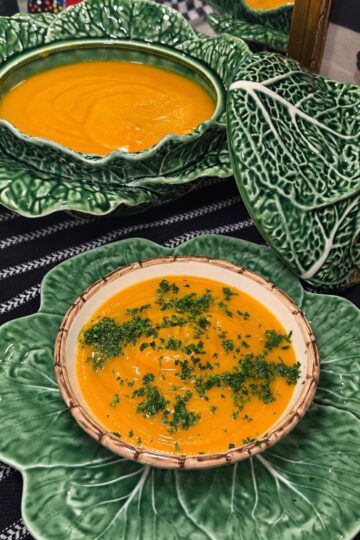
Portuguese soup 🍲: Start your meal with a bowl of Sopa de Abóbora for an extra comforting dinner.
And if you’re feeding a crowd, simply double the recipe and bring the pot straight to the table.
How to Store, Freeze and Reheat ❄️
Can I make this ahead?
Yes! You can prepare the refogado and chop your vegetables ahead of time.
For the best texture, I recommend cooking the chicken and potatoes closer to serving time.
If you’re making the entire stew in advance, consider preparing fresh poached eggs when you’re ready to serve.
How long does it last in the fridge?
Allow the stew to cool slightly, then transfer it to airtight containers and refrigerate promptly, within two hours of cooking.
Store at 4°C (40°F) or below and enjoy within 3–4 days.
Can I freeze Portuguese chicken stew?
Yes, although the potatoes may become softer after freezing.
For the best quality, freeze without the eggs in an airtight, freezer-safe container for up to 2–3 months.
Thaw overnight in the refrigerator before reheating.
How do I reheat it?
Reheat gently on the stovetop over medium-low heat.
Add a splash of chicken broth or water if the molho has thickened too much.
Stir carefully to avoid breaking up the potatoes and heat until the stew reaches 165°F (74°C).
Frequently Asked Questions ❓
Is frango guisado a traditional Portuguese dish?
Yes! Frango guisado is a traditional Portuguese home-style chicken stew. Recipes vary by household and region, but many begin with a refogado made from onion, garlic, olive oil and bay leaf.
What is the difference between frango guisado and ervilhas com ovos?
Frango guisado refers to stewed chicken, while ervilhas com ovos is a Portuguese dish featuring peas and eggs, often cooked with chouriço in a tomato-based sauce.
This recipe brings those familiar flavours together into one hearty meal.
Can I use frozen peas?
Absolutely! Frozen peas work beautifully and don’t need to be thawed before cooking.
Why is my chicken breast dry?
Chicken breast is lean and can dry out if cooked too long.
Cut it into medium-sized pieces, season beforehand and simmer gently.
For a more forgiving option, use boneless chicken thighs.
How do I thicken my Portuguese chicken stew?
Mash one or two pieces of cooked potato into the molho.
This naturally thickens the sauce without adding flour or cornstarch.
Is Portuguese pimenta moída spicy?
It depends on the variety.
Some pimenta moída is mild, while others have more heat. Start with a smaller amount if you’re unsure and adjust to taste.
Do I have to add eggs?
Not at all!
The eggs are a delicious addition, but the stew is still wonderful without them.
Can I make this recipe for a large family gathering?
Yes! Simply double the ingredients and use a larger pot.
Be mindful of the amount of broth and allow enough time for the chicken and potatoes to cook through.
More Portuguese Recipes You’ll Love 🇵🇹♥️
If you love comforting Portuguese home cooking, here are a few more recipes to try from my cozinha!
Sopa de Abóbora
Bife à Casa
Portuguese Garlic Shrimp
Pernil Assado
From My Cozinha to Yours ♥️
There’s something so special about keeping these traditional Portuguese recipes alive.
For me, it’s about more than just cooking. It’s about recreating those familiar flavours, the smells that filled our homes and the meals that brought everyone together.
And now, being able to share those same traditions with my own children makes it even more meaningful. 🥹♥️
I hope
Portuguese Chicken Stew with Peas, Potatoes & Chouriço 🇵🇹♥️
Ingredients
- 2 lbs 900 g boneless, skinless chicken breast, cut into 1½–2-inch pieces
- 2 links Portuguese chouriço sliced into rounds
- 5 medium potatoes peeled and cut into medium chunks
- 4 cups frozen green peas
- 4 - 5 large eggs
- 1 large onion finely chopped
- 3 –4 garlic cloves minced
- 2 bay leaves
- 3 tablespoon Portuguese olive oil
- 3 tablespoon tomato paste
- 1 tablespoon Portuguese pimenta moída or to taste
- 2 teaspoon sweet paprika colorau
- Approximately 3 cups chicken broth or water plus more as needed
- ½ teaspoon salt to start adjusted to taste
- ¼ teaspoon ground white pepper adjusted to taste
Instructions
- Season the chicken.
- Cut the chicken breast into medium-sized pieces, approximately 1½–2 inches. Season with ½ teaspoon salt and ¼ teaspoon white pepper, tossing well to coat. Set aside.
- Prepare the refogado. 🧅🌿
- Heat 3 tablespoons of olive oil in a large heavy-bottomed pot over medium heat. Add the chopped onion and 2 bay leaves. Cook for 5–7 minutes until softened and translucent. Add the minced garlic and cook for another minute.
- Add the tomato paste and pimenta moída. 🌶️
- Stir in 3 tablespoons of tomato paste and 1 tablespoon of Portuguese pimenta moída. Cook for approximately 2 minutes, stirring frequently to combine with the refogado.
- Add the chouriço and paprika. 🇵🇹
- Add the sliced chouriço and cook for 3–4 minutes, stirring occasionally to release its flavourful oils. Add 1-2 teaspoon sweet paprika (colorau) and stir for another 30 seconds.
- Add the chicken. 🍗
- Add the seasoned chicken breast to the pot, stirring to coat it in the refogado. Cook for 3–4 minutes, turning occasionally. The chicken doesn’t need to be fully cooked at this stage.
- Add the broth and potatoes. 🥔
- Pour in approximately 3 cups of chicken broth or water. Add the peeled, chopped potatoes. The liquid should reach close to the top of the potatoes without completely covering them. Add a little more broth if needed.
- Bring to a gentle simmer, cover and cook for approximately 12–15 minutes, until the potatoes begin to soften.
- Add the ervilhas.
- Add 4 cups of frozen green peas directly into the pot. Gently stir to combine.
- The liquid should reach close to the top of the peas, but they don’t need to be fully submerged.
- Cover and simmer for another 5–8 minutes, until the peas are tender, the potatoes are fork-tender and the chicken reaches an internal temperature of 165°F (74°C).
- Add the eggs. 🥚
- Using a spoon, create 4-5 small spaces in the stew. Carefully crack an egg into each space.
- Cover and simmer gently for approximately 4–7 minutes, depending on how you prefer your eggs.
- Alternatively, poach the eggs separately and place them on top of the stew when serving for better control over their consistency.
- Garnish with parsley (optional), Finish and serve. ♥️
- Taste the molho and adjust salt and white pepper if needed.
- For a thicker consistency, gently mash one or two cooked potato pieces into the sauce.
- Allow the stew to rest for approximately 5 minutes before serving.
- Serve warm with plenty of molho (sauce) and fresh Portuguese bread.


Leave a Reply