
If there’s one soup that instantly takes me back to my childhood, it’s Canja de Galinha, or what I like to call Portuguese penicillin! ❤️ Made with a rich homemade chicken broth, tender shredded chicken, carrots, and little Portuguese pevide pasta, this comforting Portuguese chicken soup is simple, nourishing, and full of flavour.
And if you grew up in a Portuguese household, chances are you know exactly what I’m talking about!
Whenever someone was feeling under the weather, there was always a pot of canja on the stove. It didn’t matter whether you had a cold, a sore throat, or simply weren’t feeling yourself. Somehow, a warm bowl of this sopa made everything feel a little better.
Now, as a mãe myself, I find myself making those same comforting meals for my own children. And isn’t that something? The very dishes we grew up eating are now the ones we’re passing down to the next generation. 🥹
This particular recipe comes from my avó, and it’s exactly the kind of cooking I love sharing here at Rainha da Cozinha. Nothing fancy, nothing complicated, just good homemade Portuguese food that brings everyone around the table.
🇵🇹 What Is Canja de Galinha?
Canja de Galinha is a traditional Portuguese chicken soup made with chicken broth, tender chicken, and usually rice or small pasta.
The Portuguese word galinha means hen, and Canja de Galinha is commonly understood as Portuguese chicken soup.
Now, minha gente, let’s talk about something! 🤣
If there’s one thing I’ve learned from sharing Portuguese recipes online, it’s that everyone has an opinion about how our traditional dishes should be made.
And canja is certainly no exception!
In the past, I’ve received plenty of comments about what canja is supposed to look like, whether it should have carrots, whether it should be made with rice or pasta, and what ingredients belong in a proper Portuguese chicken soup.
But here’s the thing. When you look into Portuguese cooking traditions, you’ll find different versions of canja depending on the region, household, and family recipe.
Some are made with rice, others with little pasta, and some are nothing more than a beautiful golden broth with tender chicken.
At the end of the day, this is my family’s canja. More importantly, it’s my avó’s recipe. ❤️
And that’s what makes it special to me.
It’s the version I remember, the version that brings me comfort, and the version I want my children to grow up knowing.
Because sometimes the most meaningful recipes aren’t the ones with the longest ingredient lists. They’re the ones that remind you of home.
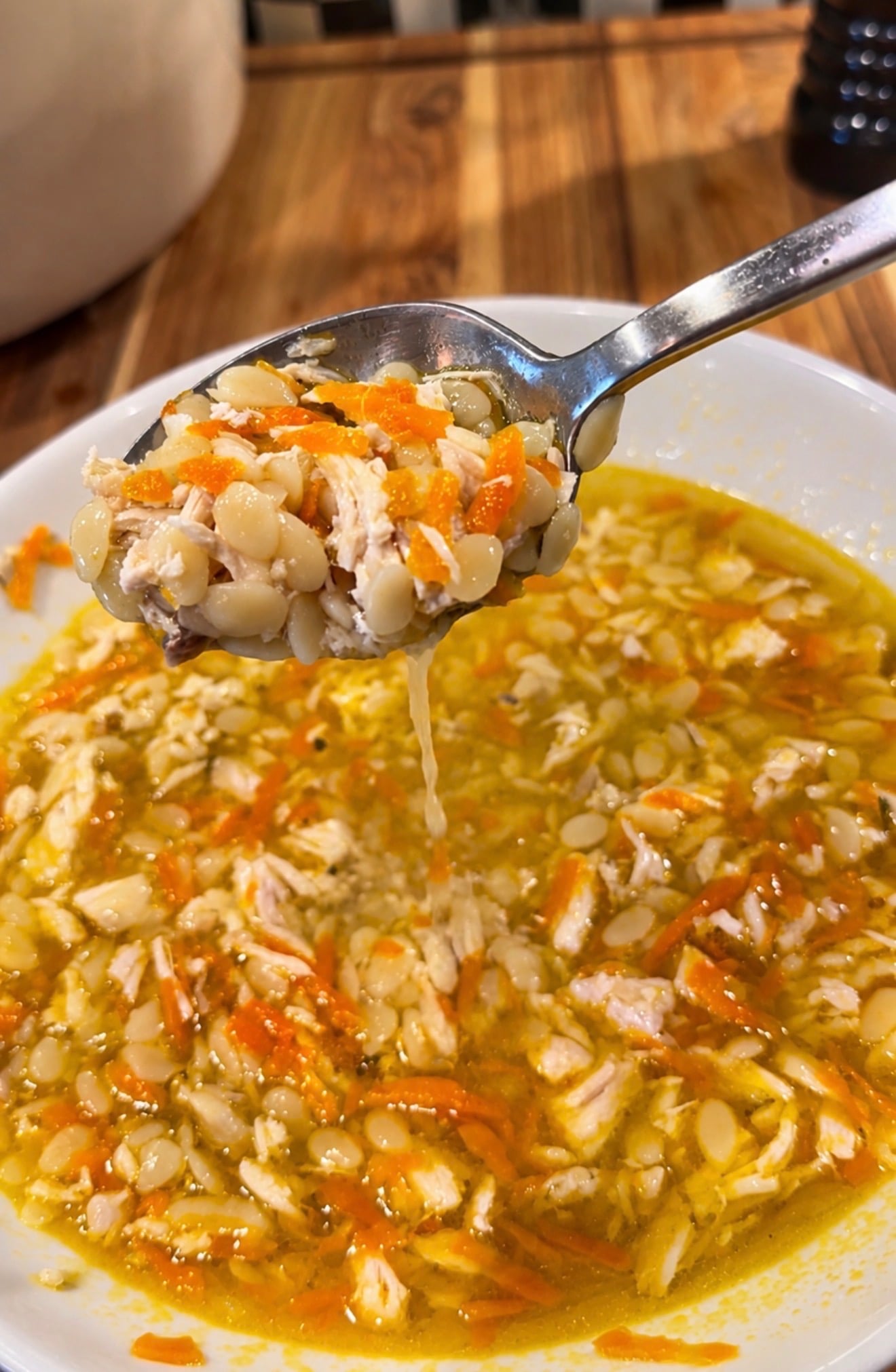
❤️ Why You’ll Love This Portuguese Chicken Soup
🍗 Homemade chicken broth: Simmering a whole chicken with onion, garlic, bay leaf, and thyme creates a beautifully flavourful broth.
🥕 Simple ingredients: Nothing complicated or difficult to find. Just wholesome ingredients that work beautifully together.
🥣 Perfect comfort food: A warm, soothing soup that’s especially comforting when you’re feeling under the weather.
🇵🇹 A traditional family recipe: Made the way my avó prepared it, with Portuguese pevide pasta.
👩🍳 Great for busy families: Make a large pot and enjoy it throughout the week.
🍋 A fresh finishing touch: A squeeze of lemon brightens the entire bowl.
🛒 Ingredients for Canja de Galinha
One of the things I love most about Portuguese cooking is how a handful of simple ingredients can create something so flavourful.
For this recipe, we’re making our chicken broth from scratch using a whole chicken. Trust me, it’s worth it!
🍗 For the Homemade Chicken Broth
1 whole chicken (approximately 3–4 lb / 1.4–1.8 kg): Using the entire chicken, including the bones, gives the broth its beautiful flavour.
1 medium onion, peeled and halved: Adds natural sweetness and depth.
4 garlic cloves, peeled: Because what’s Portuguese cooking without garlic?
1 bay leaf: A classic ingredient in my cozinha!
2–3 sprigs fresh/dry thyme: Adds a lovely, subtle herbal flavour.
12–14 cups water, or enough to cover the chicken: This becomes our homemade broth.
Salt, to taste: Start lightly and adjust later.
🥕 For the Canja Soup
2 tablespoons olive oil: For sautéing the vegetables.
1 medium onion, finely chopped: Creates a delicious flavour base.
3 garlic cloves, minced: Adds another layer of flavour.
2 medium carrots, shredded: Adds a little sweetness, colour, and texture.
1½ cups dry massa pevide: The small, rice-shaped pasta traditionally used in many Portuguese soups.
3–4 cups shredded cooked chicken, or the amount from your whole chicken: Tender and delicious!
10–12 cups homemade chicken broth: Use the broth prepared from the whole chicken, adding more as needed.
Salt and black pepper, to taste: Adjust according to your preference.
Fresh lemon wedges, for serving: My favourite finishing touch! 🍋
A little note: These measurements are a practical guide for a whole-chicken batch of my avó’s recipe. As with so many traditional Portuguese dishes, you can adjust the broth, pasta, and seasonings to your family’s liking.
👩🍳 How to Make Canja de Galinha (Portuguese Chicken Soup)
This recipe is made in two simple stages. First, we prepare a homemade chicken broth, and then we use that beautiful broth to make our soup.
And don’t let the idea of making broth from scratch intimidate you. It’s honestly one of the easiest things you can do!
Step 1: Make the Homemade Chicken Broth 🍗
Place the whole chicken into a large stockpot.
Add the halved onion, whole garlic cloves, bay leaf, and fresh thyme.
Pour in enough water to cover the chicken, approximately 12–14 cups, depending on the size of your pot.
Season lightly with salt.
Bring everything to a gentle boil over medium-high heat. Skim away any foam that rises to the surface, then reduce the heat to maintain a gentle simmer.
Allow the chicken to cook for approximately 60–90 minutes, depending on its size, until completely cooked and tender. The thickest part should reach a minimum internal temperature of 165°F (74°C).
Avó Tip ❤️: Don’t rush your broth! A gentle simmer helps develop flavour without reducing the liquid too quickly.
Step 2: Remove the Chicken and Strain the Broth 🥣
Once the chicken is cooked, carefully remove it from the pot and transfer it to a large plate or bowl.
Allow it to cool slightly until it’s comfortable to handle.
Using a fine-mesh strainer, strain the broth into a clean pot or heat-safe bowl, removing the onion, garlic, bay leaf, thyme, and any remaining solids.
What you’re left with is a beautiful homemade chicken broth that will become the base of your canja.
Step 3: Shred the Chicken 🍗
Once the chicken has cooled enough to handle, remove the skin and bones.
Using your hands or two forks, shred the chicken into bite-sized pieces.
Set aside until ready to add it back into the soup.
You can use all the shredded meat or adjust the amount depending on how hearty you prefer your canja.
Step 4: Sauté the Vegetables 🥕
In a separate large pot, heat the olive oil over medium heat.
Add the finely chopped onion and sauté for approximately 3–4 minutes, until softened and translucent.
Stir in the minced garlic and shredded carrots.
Continue sautéing for another 3–5 minutes, stirring occasionally, until the carrots begin to soften and everything smells absolutely delicious.
This simple step adds another layer of flavour to the finished soup.
Step 5: Add the Homemade Broth 🍲
Pour approximately 10–12 cups of the strained homemade chicken broth into the pot with the sautéed vegetables.
Give everything a good stir and bring the broth to a gentle boil.
Taste and adjust the seasoning with salt and black pepper if needed.
If your broth has reduced significantly while cooking the chicken, you can add a little hot water to make up the difference.
Step 6: Add the Portuguese Pevide Pasta 🇵🇹
Once the broth reaches a gentle boil, add the massa pevide.
Pevide is a small, rice-shaped pasta that’s commonly used in Portuguese soups.
Stir well and allow the pasta to cook according to the package directions, usually around 8–12 minutes, or until tender.
Keep in mind that pasta absorbs liquid as it cooks, so you may need to add a little more broth if the soup becomes too thick.
Step 7: Add the Shredded Chicken ❤️
When the pasta is almost finished cooking, add the shredded chicken back into the pot.
Stir everything together and allow it to simmer for another 2–3 minutes, until the chicken is heated through and the pasta is tender.
Taste one final time and adjust the seasoning if needed.
And that’s it, minha gente!
A beautiful pot of homemade Canja de Galinha, made with the simplest ingredients and so much flavour.
Step 8: Serve With Fresh Lemon 🍋
Ladle the warm soup into individual bowls.
Just before serving, squeeze a little fresh lemon juice over the top.
I absolutely love adding lemon to my canja. It brings a beautiful freshness to the broth and balances all those comforting flavours.
Serve immediately while it’s nice and warm!
🍝 What Is Massa Pevide?
Massa pevide is a small Portuguese pasta shaped like grains of rice.
It’s very similar to Italian orzo or risoni pasta and is commonly used in Portuguese soups, particularly Canja de Galinha.
The word pevide can refer to a seed or pip, which makes sense when you look at the shape of this little pasta!
Although many traditional canja recipes use rice, pevide is another familiar option in Portuguese households.
And for my avó’s version, it’s the pasta we’re using. ❤️
If you can’t find pevide at your local Portuguese grocery store, you can substitute orzo or risoni pasta.
👵 My Avó’s Tips for the Perfect Canja
- Use a whole chicken. 🍗
While you can certainly make chicken soup with individual chicken pieces, using a whole chicken gives the broth more depth and flavour.
The bones, skin, and meat all contribute to that rich homemade taste.
- Don’t skip straining the broth. 🥣
Straining removes the cooked aromatics, bones, and any small solids, leaving you with a smoother broth.
- Sauté your vegetables first. 🥕
Rather than simply adding everything to the broth, sautéing the onions, garlic, and carrots in olive oil helps develop their flavour.
- Watch your pasta! 🍝
Pevide is small and cooks fairly quickly.
Keep an eye on it so it doesn’t become overly soft. Remember that it will continue absorbing broth even after the soup has finished cooking.
- Always save extra broth. ❤️
If you’re planning to enjoy the soup the following day, keep a little additional broth on hand.
The pasta will absorb some of the liquid as it sits, so adding more broth when reheating helps bring the soup back to your preferred consistency.
- Finish with lemon. 🍋
This is one of my favourite ways to enjoy canja.
A little squeeze of fresh lemon right before serving makes such a difference!
🔄 Canja de Galinha Variations and Substitutions
One of the beautiful things about traditional Portuguese cooking is that recipes naturally change from one household to another.
Here are a few ways you can adapt this Portuguese chicken soup.
🍚 Canja with rice: Replace the pevide with white rice. Keep in mind that rice may require a longer cooking time and additional broth.
🍝 Different pasta: If pevide isn’t available, orzo or another small soup pasta works beautifully.
🥕 Extra vegetables: Some families enjoy adding celery, additional carrots, or other vegetables.
🍗 Chicken pieces instead of a whole chicken: Bone-in chicken thighs or drumsticks can also be used to prepare a flavourful homemade broth.
🌿 Different herbs: Thyme is what I use in this version, but parsley is another lovely addition.
Of course, these are simply variations. The recipe I’m sharing today is based on my avó’s version.
🍽️ What to Serve With Portuguese Chicken Soup
Honestly, a big bowl of canja is enough for me, especially when I’m not feeling well.
But if you’re serving it as part of a family lunch or dinner, there are a few delicious ways to enjoy it.
🥖 Portuguese bread: A fresh slice of pão caseiro or pão d’água is perfect alongside the broth.
🧈 Toasted bread: A simple piece of buttered toast is lovely for dipping.
🥗 A light salad: If you’re serving canja as a starter, follow it with a fresh salad or another Portuguese family favourite.
🍋 Extra lemon: Always keep a few lemon wedges on the table for anyone who enjoys a little extra freshness.
🧊 How to Store, Freeze, and Reheat Canja de Galinha
Can You Make Canja Ahead of Time?
Absolutely!
In fact, one of my favourite things about homemade chicken soup is that you can prepare the broth ahead of time.
Make the chicken broth, strain it, shred the chicken, and refrigerate everything in separate airtight containers.
When you’re ready to make the soup, sauté your vegetables and finish with the broth, pevide, and shredded chicken.
This is especially convenient for busy families.
How Long Does Canja Last in the Fridge?
Allow the soup to cool promptly and transfer it into shallow airtight containers.
Refrigerate within two hours of cooking.
Properly stored, Canja de Galinha will keep in the refrigerator for approximately 3–4 days.
Can You Freeze Portuguese Chicken Soup?
Yes! ❤️
However, if you’re planning to freeze a large batch, I recommend freezing the broth and shredded chicken without the pasta.
Pevide can become very soft after freezing and reheating.
Freeze the broth and chicken in freezer-safe containers for up to 2–3 months for the best quality.
When ready to serve, thaw safely in the refrigerator, reheat the broth, and add freshly cooked pevide.
How Do You Reheat Canja?
Reheat the soup in a saucepan over medium heat, stirring occasionally, until piping hot throughout, reaching 165°F (74°C).
Add extra broth or a splash of water if the pasta has absorbed too much liquid.
You can also reheat individual portions in the microwave, stirring halfway through for even heating.
❓ Frequently Asked Questions About Canja de Galinha
What does Canja de Galinha mean in English?
Canja de Galinha is the Portuguese name for a traditional chicken soup.
It’s a comforting dish commonly prepared with homemade chicken broth, chicken, and rice or small pasta.
Is Canja de Galinha the same as chicken noodle soup?
They’re very similar!
Both are comforting chicken soups made with broth, chicken, and often pasta.
Portuguese canja is commonly prepared with rice or small pasta such as pevide, while North American chicken noodle soup typically uses noodles.
Is traditional Portuguese canja made with rice or pasta?
Both versions exist!
Many traditional Portuguese recipes use rice, while other households prepare canja with small pasta such as pevide.
The ingredients and preparation can vary depending on family traditions.
What is pevide pasta?
Pevide is a tiny, rice-shaped pasta used in Portuguese cooking.
It’s similar to orzo or risoni and is especially popular in soups.
Can I use store-bought chicken broth?
Yes, if you’re short on time.
However, I highly recommend making the broth from scratch with a whole chicken if you can.
It’s what gives this recipe that homemade flavour I remember from my childhood.
Why is my canja getting thick?
The pevide pasta continues to absorb liquid as the soup sits.
This is completely normal!
Simply add more chicken broth when reheating until you reach your preferred consistency.
Is Canja de Galinha good when you’re sick?
Canja has long been a comforting meal in Portuguese households when someone is feeling under the weather.
Warm broth can help with hydration, while the chicken and pasta provide protein and energy.
Although it isn’t a cure for illness, it’s certainly one of those dishes that can make a difficult day feel a little more comforting.
And that’s exactly why I lovingly call it Portuguese penicillin! ❤️
🥣 More Portuguese Soup Recipes You’ll Love
If there’s one thing you’ll always find cooking in my cozinha, it’s a good pot of sopa!
Here are a few more comforting Portuguese soups to try:
Sopa à Portuguesa: A hearty Portuguese soup filled with vegetables and comforting flavours.
Caldo Verde: The classic Portuguese potato and greens soup that’s loved in so many households.
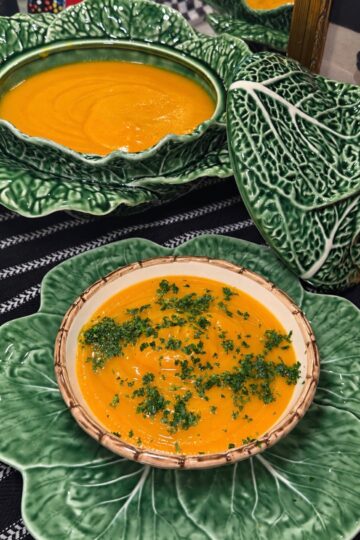
Sopa de Abóbora: A creamy, comforting pumpkin soup that’s perfect for the cooler months.
You can find more of my homemade Portuguese recipes at Rainha da Cozinha.
❤️ A Little Piece of My Childhood in Every Bowl
There’s something so special about making the dishes we grew up eating.
As a child, I never really thought about the work or love that went into those meals. I just knew that when I wasn’t feeling well, there was always someone in the cozinha making something warm and comforting.
And now, years later, here I am doing the same thing for my own family.
It’s funny how food has a way of bringing us back to people.
Canja de Galinha (Portuguese Chicken Soup) | My Avó’s Recipe ❤️🇵🇹
Ingredients
Broth
- 1 whole chicken approximately 3–4 lb
- 1 medium onion peeled and halved
- 4 garlic cloves peeled
- 1 bay leaf
- 2 2–3 sprigs fresh/dry thyme
- 12 12–14 cups water or enough to cover the chicken
- Salt to taste
Canja
- 2 tablespoon olive oil
- 1 medium onion finely chopped
- 3 garlic cloves minced
- 2 medium carrots shredded
- 1½ cups massa pevide Portuguese rice-shaped pasta
- 3 3–4 cups cooked shredded chicken or the amount obtained from the whole chicken
- 10 10–12 cups homemade chicken broth plus extra as needed
- Salt and black pepper to taste
- Fresh lemon wedges for serving
Instructions
- Prepare the homemade chicken broth. Place the whole chicken into a large stockpot with the halved onion, garlic cloves, bay leaf, and fresh or dried thyme. Add enough water to cover the chicken and season with salt. Bring to a gentle boil, skim off any foam, then reduce the heat and simmer for approximately 60–90 minutes, until the chicken is fully cooked and tender.
- Strain the broth. Carefully remove the cooked chicken and set aside to cool slightly. Strain the broth through a fine-mesh strainer, removing the onion, garlic, bay leaf, thyme, and any remaining solids. Reserve the broth.
- Shred the chicken. Once cool enough to handle, remove the skin and bones and shred the chicken into bite-sized pieces. Set aside.
- Sauté the vegetables. In a large clean pot, heat the olive oil over medium heat. Add the chopped onion and sauté for 3–4 minutes until softened. Stir in the minced garlic and shredded carrots and continue cooking for another 3–5 minutes, stirring occasionally.
- Add the broth and pasta. Pour 10–12 cups of the reserved chicken broth into the pot and bring to a gentle boil. Add the massa pevide and stir. Cook according to the package instructions, usually 8–12 minutes, stirring occasionally to prevent sticking.
- Add the shredded chicken. Once the pasta is nearly cooked, add the shredded chicken back into the pot. Stir and simmer for another 2–3 minutes until heated through. Taste and adjust the salt and pepper. Add extra broth if needed.
- Serve with fresh lemon. Ladle the warm canja into bowls and finish with a squeeze of fresh lemon juice. Serve immediately and enjoy! ❤️


Leave a Reply