
If you’re looking for a juicy roast turkey with crispy golden skin and tons of flavour, this Portuguese-inspired turkey is it. 🦃🇵🇹 An overnight dry brine, a buttery Portuguese-style marinade and my not-so-secret weapon — a meat injector — make this one of the juiciest turkeys I have ever made.
I have tried turkey SO many different ways over the years. Wet brines, marinades, butter over the skin, butter under the skin, basting… you name it. And if there is one thing I cannot handle, it’s spending hours cooking a beautiful holiday turkey only to cut into a dry breast. 😭
This method has completely changed that for me.
We’re dry brining overnight, seasoning it with some of my favourite Portuguese flavours and actually injecting seasoned butter directly into the turkey. That injector is the hidden gem here. 💉🧈
The result? Crispy skin on the outside and ridiculously juicy, flavourful meat inside.
Jump to:
- Why You’ll Love This Portuguese Turkey ❤️
- 🧂 Dry Brine vs. Wet Brine: What’s the Difference?
- Why I Prefer a Dry Brine
- 💉 My Secret to the Juiciest Turkey: Use a Meat Injector!
- 🇵🇹 What Makes This Turkey Portuguese-Inspired?
- 🛒 Ingredients
- 🦃 How to Make the Juiciest Portuguese-Style Turkey
- ⭐ My Tips for the Juiciest Turkey
- 🍽️ What to Serve With Portuguese Turkey
- 🧊 Make Ahead, Storage & Reheating
- ❓ Portuguese Turkey FAQs
- ❤️ From My Cozinha to Yours
- 🇵🇹 Portuguese-Style Roast Turkey – The Juiciest Thanksgiving Turkey
Why You’ll Love This Portuguese Turkey ❤️
This isn’t necessarily a traditional Portuguese turkey recipe passed down for generations. It is my Portuguese-inspired take on a classic Thanksgiving turkey, using flavours that feel familiar in my cozinha: paprika, pimenta moída, bay leaf, oregano, rosemary, garlic, olive oil and white wine.
And because I’m always trying to figure out how to get maximum flavour without making things unnecessarily complicated, I’ve taken everything I’ve learned from making turkey over the years and put it into one recipe.
The three things that make the biggest difference are:
Dry brine. Butter under the skin. And THE INJECTOR.
Seriously. Don’t skip that injector. 😂
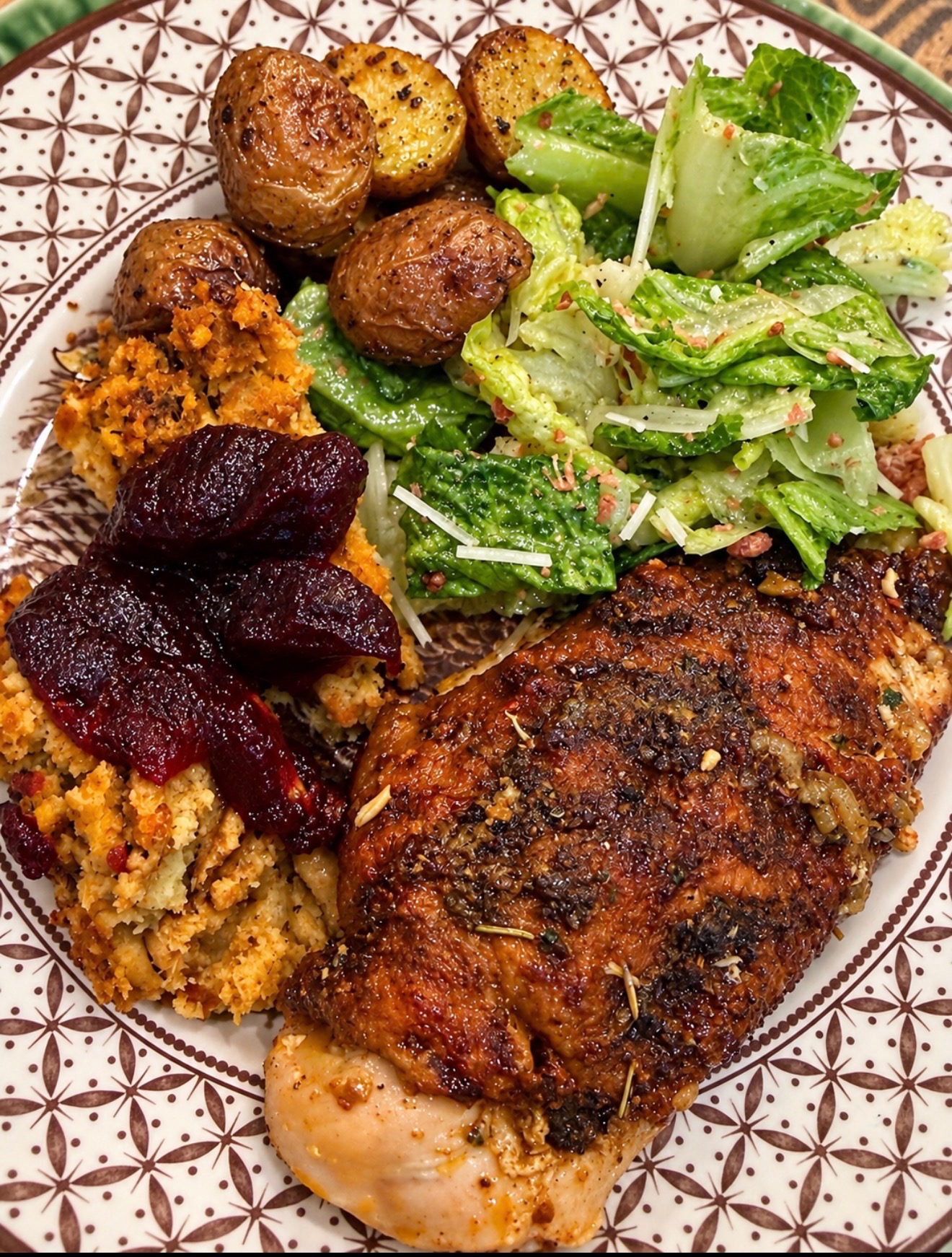
🧂 Dry Brine vs. Wet Brine: What’s the Difference?
There are two common ways to brine a turkey: wet brining and dry brining.
What is a wet brine?
A wet brine involves completely submerging the turkey in a mixture of water and salt, sometimes with sugar, herbs, citrus and spices.
It can absolutely produce a juicy turkey, but you need a very large container, enough refrigerator space to safely hold it and a LOT of liquid.
And then you’re dealing with a giant container of raw-turkey brining liquid afterward. 😅
What is a dry brine?
A dry brine is exactly what it sounds like.
Instead of soaking the turkey in water, you season the turkey with salt and leave it uncovered in the refrigerator overnight.
The salt initially draws moisture toward the surface. Over time, the seasoned moisture is reabsorbed while the refrigerator’s dry air helps dry the skin.
That means flavourful meat AND skin that’s set up to get beautifully golden and crispy. 🙌
Why I Prefer a Dry Brine
After trying different methods, dry brining is my preference.
It’s easier, takes up less refrigerator space and, most importantly for me, helps give me that gorgeous crispy turkey skin.
There is also no huge bucket of turkey water taking over my fridge. 😂
For this recipe, I dry brine the turkey the night before and leave it uncovered in the refrigerator.
IMPORTANT: Before brining, check your turkey’s packaging. If it says pre-brined, seasoned, self-basting, enhanced or that it contains an added salt solution, you may need to reduce or skip the additional salt.
💉 My Secret to the Juiciest Turkey: Use a Meat Injector!
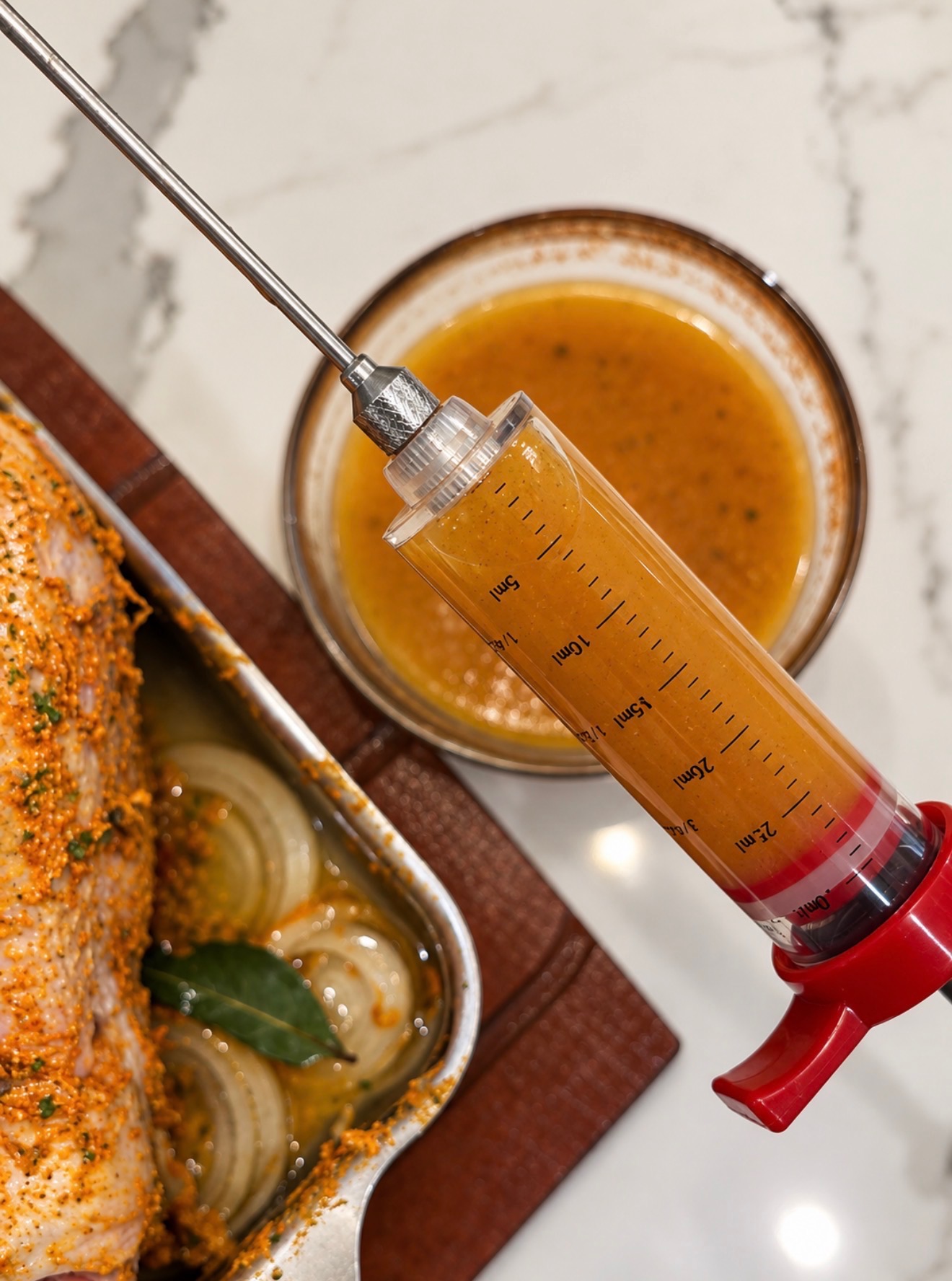
Okay, THIS is my hidden gem.
If you’re constantly wondering how to make turkey breast juicy, buy yourself a meat injector.
You can rub butter all over a turkey, and you can put butter underneath the skin, but injecting allows you to put seasoned liquid inside the thickest parts of the meat itself.
I make a simple injection with melted unsalted butter, stock, white wine, garlic powder and paprika. Then I inject small amounts throughout the breasts, thighs and drumsticks.
The important part is not to inject one giant pocket of liquid. Make several smaller injections throughout the turkey.
💡 Rainha Tip: Keep your injection mixture smooth. If you’re using fresh garlic or anything chunky, strain it first or your syringe can clog. I use garlic powder here, which makes things even easier.
For me, this step is a MUST now.
🇵🇹 What Makes This Turkey Portuguese-Inspired?
It’s all about those flavours we use again and again in Portuguese cooking.
Pimenta moída: Adds that unmistakable Portuguese pepper flavour. Keep in mind that many varieties are already salty.
Colorau / sweet paprika: Gives the turkey warmth, colour and a gorgeous savoury flavour.
Garlic: Because is it even coming out of my cozinha without garlic? 😂 I use garlic powder here because it’s easy, distributes evenly and doesn’t burn like pieces of fresh garlic can.
White wine: A classic flavour in so many Portuguese marinades and sauces.
Bay leaves: One of those ingredients that somehow finds its way into everything in a Portuguese cozinha. 😂
Oregano + rosemary: Earthy herbs that work beautifully with poultry.
Olive oil: Of course. 🇵🇹
🛒 Ingredients
For the Turkey
1 whole turkey, approximately 3-5 kg
Onion wedges, for the bottom of the roasting pan
1 cup dry white wine
1 cup chicken or turkey stock
2 bay leaves
For the Overnight Dry Brine
Kosher salt, appropriate to the weight of your turkey*
1 tablespoon baking powder
1 teaspoon sweet paprika / colorau
½ teaspoon garlic powder
½ teaspoon white pepper
The amount of salt depends heavily on the brand because different kosher salts have different densities. For a 3-5 kg turkey, weigh your salt when possible or follow the salt manufacturer’s dry-brining guidance. Do not substitute the same volume of fine/table salt.
Use baking POWDER, not baking soda. Baking powder helps promote browning and crisp skin without the harsh alkaline flavour too much baking soda can create.
🇵🇹 Portuguese Seasoned Butter
6 tablespoon unsalted butter, softened
2 teaspoon garlic powder
1½ tablespoon sweet paprika / colorau
1 tablespoon pimenta moída
1 teaspoon white pepper
1 tablespoon olive oil
1 teaspoon dried parsley
½ teaspoon dried oregano
½ teaspoon dried rosemary, crushed between your fingers
Zest of ½ lemon
Do not add additional salt here if you’ve already dry brined the turkey. Pimenta moída can also be quite salty.
💉 Butter Injection
4 tablespoon unsalted butter, melted
⅓ cup chicken or turkey stock
2 tablespoon dry white wine
½ teaspoon garlic powder
½ teaspoon sweet paprika / colorau
For the Cavity
½ onion, quartered
½ lemon, quartered
Hand full of parsley
🦃 How to Make the Juiciest Portuguese-Style Turkey
- Dry Brine the Turkey Overnight
The night before roasting, remove the neck and giblets.
Pat the turkey very dry with paper towel.
Combine your kosher salt with the baking powder, paprika, garlic powder and white pepper.
Season the turkey evenly, including underneath the breast skin where possible and lightly inside the cavity.
Place the turkey on a tray and refrigerate uncovered overnight.
That uncovered refrigerator time is important. Don’t wrap it!
- Make the Portuguese Seasoned Butter 🇵🇹
The next day, remove the turkey from the refrigerator.
Do not rinse off the dry brine.
Combine the softened butter, garlic powder, paprika, pimenta moída, white pepper, olive oil, dried parsley, oregano, rosemary and lemon zest.
Gently loosen the skin over the breasts with your fingers without tearing it.
Massage approximately half of the seasoned butter directly onto the breast meat underneath the skin.
Rub the remaining mixture over the outside of the turkey, including the legs and wings.
- Add the Aromatics
Place the onion, lemon and bay leaves loosely inside the cavity.
Don’t pack the cavity tightly.
- Prepare the Roasting Pan
Heat your oven to 325°F / 165°C.
Place thick onion wedges across the bottom of a deep roasting or lasagna pan and set the turkey breast-side up over them.
Pour the white wine and stock around the turkey, not over it. We don’t want to wash off all that beautiful seasoning.
Add the bay leaves to the liquid.
- 💉 Inject the Turkey
Melt the butter and combine it with the stock, white wine, garlic powder and paprika.
Whisk until smooth.
Fill your meat injector while the mixture is warm and fluid but not piping hot.
Inject small amounts in several different places throughout both breasts, thighs and drumsticks.
This is the step I swear by for getting that flavour and moisture inside the meat instead of only sitting on the surface.
- Roast
Roast the turkey uncovered at 325°F / 165°C.
For a turkey around 3-5 kg, begin checking the internal temperature at approximately 2¼ hours. Cooking time will vary depending on the exact size of your turkey, your oven and how cold the bird was when it went in.
Baste occasionally with the pan juices, approximately every 45 minutes.
If the breast becomes beautifully browned before the turkey is finished cooking, loosely tent just the breast with aluminum foil.
- Check the Temperature 🌡️
Do not rely solely on cooking time.
Insert an instant-read thermometer into the thickest part of the breast and the innermost part of the thigh without touching bone.
The turkey is safely cooked when it reaches at least 165°F / 74°C. I personally like the dark meat cooked a little higher for a more tender texture.
- REST IT!
This is another step you cannot skip.
Carefully remove the turkey from the roasting pan and transfer it to a large cutting board or platter.
Do not leave it sitting in the pan juices.
Loosely tent it with foil and allow it to rest for 30–40 minutes before carving.
Resting gives those juices time to redistribute instead of pouring all over your cutting board the second you slice into it.
And SAVE those pan drippings! 🤤
The combination of turkey juices, butter, Portuguese seasoning, onions, white wine and stock makes the most incredible base for gravy or molho.
⭐ My Tips for the Juiciest Turkey
- Dry brine overnight. Don’t skip it if you have the time.
- Leave the turkey uncovered while dry brining to help dry the skin.
- Use unsalted butter because the turkey has already been salted.
- Be careful with pimenta moída because many brands contain plenty of salt.
- Put seasoned butter underneath the skin, not just over it.
- Inject the meat. This is my biggest tip!
- Inject several small pockets rather than one large amount in one place.
- Don’t continuously open the oven. Basting every 45 minutes is plenty.
- Use a meat thermometer, not just a timer.
- Remove the turkey from the pan to rest so the bottom doesn’t sit in liquid.
- Give it a full 30–40 minute rest before carving.
🍽️ What to Serve With Portuguese Turkey
For Thanksgiving, I love turning this into a Portuguese-inspired holiday table.
Serve it with:
🇵🇹 Portuguese stuffing
🥕 Algarve-style carrots
🥔 Creamy mashed potatoes or Portuguese-style roasted potatoes
🎃 Sopa de Abóbora
🥬 Greens or a simple salad
🍞 Fresh Portuguese bread
And definitely make a molho or gravy from those incredible pan drippings.
🧊 Make Ahead, Storage & Reheating
Make Ahead
Dry brine the turkey the night before. This actually makes Thanksgiving Day easier because one of the most important steps is already finished.
You can also measure your spices and prepare your roasting-pan ingredients ahead of time.
Storing Leftovers
Remove leftover turkey meat from the carcass and refrigerate it in an airtight container within 2 hours of serving.
Properly refrigerated cooked turkey will generally keep for 3–4 days.
Freezing
Cooked turkey can also be frozen. I like adding a little gravy or pan juice to the meat before freezing to help protect it from drying out.
Reheating
Place sliced turkey in an oven-safe dish with a little stock or reserved gravy. Cover and gently reheat until the turkey reaches 165°F / 74°C.
Don’t blast it at a super-high temperature. That’s how beautiful juicy turkey becomes sad leftover turkey. 😂
❓ Portuguese Turkey FAQs
Can I dry brine a turkey instead of wet brining it?
Absolutely. In fact, I prefer it! Dry brining requires less equipment and refrigerator space, seasons the turkey and helps dry the exterior for crispier skin.
Do I rinse a turkey after dry brining?
No. I don’t rinse the turkey after dry brining. If you’ve measured the salt correctly, simply continue with the recipe.
How long should I dry brine turkey?
Overnight works beautifully for this recipe. If you’re planning ahead, approximately 12–24 hours is a great window.
Can I dry brine a partially frozen turkey?
If it’s essentially thawed with only a few icy areas remaining, it can finish thawing safely in the refrigerator while dry brining. A turkey that is still substantially frozen should be safely thawed first.
Can I use baking soda instead of baking powder?
No. For this recipe, use baking powder, not baking soda.
Is a meat injector really worth it for turkey?
For me, YES. 😂 Turkey breast is thick, so surface seasoning can only do so much. Injecting seasoned butter and stock puts moisture and flavour directly into the meat.
What can I use if I don’t have a turkey roasting pan?
A deep lasagna pan works! That’s exactly what I used. Just make sure it’s large enough to comfortably hold your turkey and all those beautiful pan juices.
Do I need cheesecloth?
No. I originally considered using cheesecloth, but you absolutely don’t need it. Roast the turkey uncovered and loosely tent the breast with foil if it gets dark before the turkey is finished.
Should turkey rest in its juices?
I prefer to remove it from the roasting pan. Rest it on a cutting board or platter, loosely tented with foil. This prevents the bottom from sitting in liquid and softening while it rests.
How do I know when my turkey is done?
A thermometer is your best friend. The turkey should reach at least 165°F / 74°C in the thickest part of the breast and thigh without the thermometer touching bone.
❤️ From My Cozinha to Yours
Holiday meals are one of my favourite ways to bring our Portuguese flavours into the traditions we’re creating with our own families.
This turkey isn’t about completely changing Thanksgiving. It’s about taking that Thanksgiving turkey we all know and giving it a little taste of our cozinha. 🇵🇹❤️
After trying so many different ways of making turkey, this combination of the overnight dry brine, Portuguese seasoned butter and that little meat injector is the method I’ll keep coming back to.
If you make it, leave me a rating and comment below and let me know how it turned out! And don’t forget to tag @rainha_da_cozinha so I can see your Thanksgiving table. 🇵🇹🦃
Save this recipe to Pinterest so you have it ready for Thanksgiving and the holiday season!
🇵🇹 Portuguese-Style Roast Turkey – The Juiciest Thanksgiving Turkey
Equipment
- MEAT INJECTOR https://amzn.to/4yAhFlS
Ingredients
TURKEY
- 1 whole turkey approximately 3-5
- Onion wedges for the roasting pan
- 1 cup dry white wine
- 1 cup chicken or turkey stock
- 2 bay leaves
DRY BRINE
- Kosher salt appropriate for the weight of your turkey and brand of salt*
- 1 tablespoon baking powder
- 1 teaspoon sweet paprika / colorau
- ½ teaspoon garlic powder
- ½ teaspoon white pepper
PORTUGUESE SEASONED BUTTER
- 6 tablespoon unsalted butter softened
- 2 teaspoon garlic powder
- 1½ tablespoon sweet paprika / colorau
- 1 tablespoon pimenta moída
- 1 teaspoon white pepper
- 1 tablespoon olive oil
- 1 teaspoon dried parsley
- ½ teaspoon dried oregano
- ½ teaspoon dried rosemary crushed
- Zest of ½ lemon
BUTTER INJECTION
- 4 tablespoon unsalted butter melted
- ⅓ cup chicken or turkey stock
- 2 tablespoon dry white wine
- ½ teaspoon garlic powder
- ½ teaspoon sweet paprika / colorau
CAVITY FILLING
- ½ onion quartered
- ½ lemon quartered
- 2 bay leaves
Instructions
- Dry Brine the Turkey
- The night before roasting, remove the neck and giblets and pat the turkey very dry with paper towel.
- Combine the appropriate amount of kosher salt with the baking powder, paprika, garlic powder and white pepper.
- Season the turkey evenly, including underneath the breast skin where possible and lightly inside the cavity.
- Place on a rack OR tray and refrigerate uncovered for 12–24 hours.
- Prepare the Turkey
- The following day, preheat the oven to 325°F / 165°C.
- Remove the turkey from the refrigerator. Do not rinse off the dry brine.
- Make the Portuguese Seasoned Butter
- Mix the softened butter, garlic powder, paprika, pimenta moída, white pepper, olive oil, dried parsley, oregano, rosemary and lemon zest until combined.
- Carefully loosen the skin covering the breasts.
- Massage approximately half of the seasoned butter directly onto the breast meat underneath the skin.
- Rub the remaining seasoned butter all over the outside of the turkey, including the legs and wings. NOTE: if you run out of mixer add more to insure the turkey is completely covered.
- Fill the Cavity
- Loosely place the quartered onion, lemon and bay leaves inside the turkey cavity. Do not tightly pack the cavity.
- Prepare the Roasting Pan
- Place onion wedges across the bottom of a deep roasting or lasagna pan.
- Set the turkey breast-side up over the onions.
- Pour 1 cup white wine and 1 cup stock around the turkey, being careful not to pour it over the seasoned skin.
- Add the bay leaves to the liquid.
- Make the Butter Injection 💉
- Combine the melted butter, stock, white wine, garlic powder and paprika.
- Whisk until completely smooth.
- Fill a meat injector with the warm mixture and inject small amounts into several areas of both breasts, thighs and drumsticks.
- Avoid injecting a large amount into one location. Multiple smaller injections distribute the flavour and moisture throughout the meat.
- Roast
- Roast uncovered at 325°F / 165°C.
- Baste with the pan juices approximately every 45 minutes.
- For a turkey around 3-5 kg, begin checking the internal temperature at approximately 2¼ hours.
- If the breast becomes sufficiently golden before the turkey has finished cooking, loosely tent just the breast with aluminum foil.
- Continue roasting until the thickest part of the breast and innermost portion of the thigh reach at least 165°F / 74°C, without the thermometer touching bone.
- Rest
- Carefully transfer the cooked turkey from the roasting pan to a large cutting board or serving platter.
- Loosely tent with aluminum foil and allow it to rest for 30–40 minutes before carving.
- Do not leave the turkey resting in the pan juices if you want to preserve the crispy skin.
- Save the pan drippings for gravy or molho.
Leave a Reply