
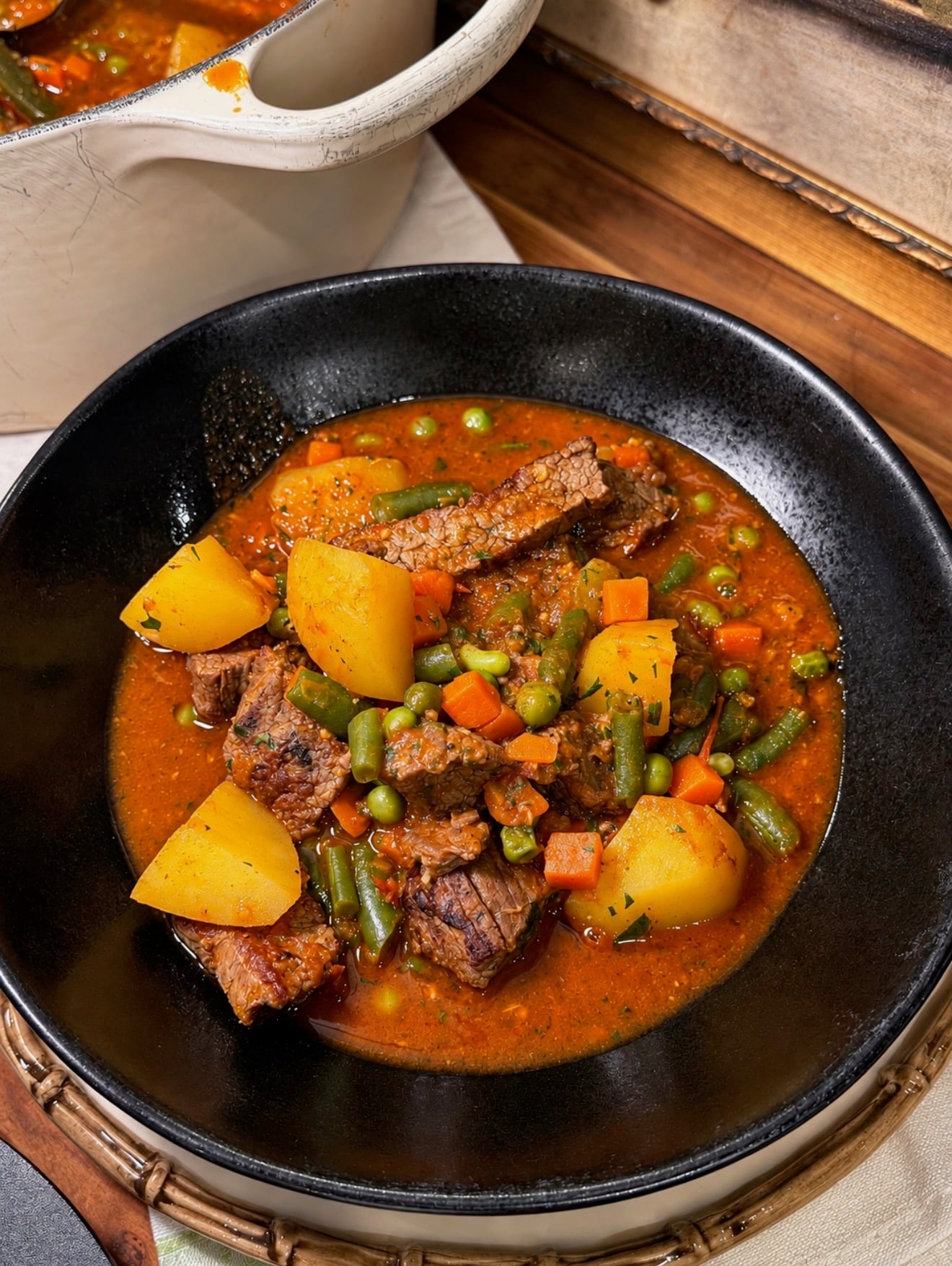
A comforting, one-pot Portuguese beef stew made with tender flank steak, potatoes, carrots, peas and green beans in a delicious homemade molho.
If there’s one thing you should know about me, it’s that I love a good Portuguese one-pot meal! ♥️
Especially this time of year, when all I want to make are those comforting guisadas and sopas that remind me of home.
Today we’re making Jardineira de Vaca à Portuguesa, and before anyone asks, no, this is not Carne Guisada! 🤣
Although the two dishes share some similarities, Jardineira is all about bringing together tender pieces of beef, potatoes and plenty of colourful vegetables in a beautiful, savoury molho.
It’s simple, hearty, full of flavour and exactly the kind of meal I love putting on the table for my family.
And the best part? Everything comes together in one pot!
Jump to:
- 🇵🇹 What Is Jardineira de Vaca?
- 🥩 What’s the Best Cut of Beef for Jardineira?
- Why I Love Using Flank Steak ♥️
- 🍲 Jardineira vs. Carne Guisada: What’s the Difference?
- 🥕 Can You Use Frozen Vegetables for Jardineira?
- 📝 Jardineira de Vaca Recipe
- 👩🏻🍳 How to Make Traditional Portuguese Jardineira
- ♥️ My Avó Tips for the Best Jardineira
- 🍽️ What to Serve with Jardineira de Vaca
- ❄️ How to Store and Reheat Jardineira
- ❓ Frequently Asked Questions
- 🇵🇹 A Little Taste of Home
- Jardineira de Vaca à Portuguesa | Traditional Portuguese Beef and Vegetable Stew 🇵🇹
🇵🇹 What Is Jardineira de Vaca?
Jardineira de Vaca is a traditional Portuguese beef and vegetable stew made with chunks of beef, potatoes, carrots, peas and often green beans, slowly cooked in a flavourful sauce.
The name Jardineira reflects the beautiful assortment of vegetables that make up this dish. Think of it as a little garden of vegetables all coming together in one pot.
Like so many traditional Portuguese recipes, every family has its own way of preparing it.
Some use different cuts of beef, others add chouriço, and the vegetables can change depending on what’s available.
For my version, I wanted to keep things simple and let the beef and vegetables shine.
No chouriço, no heavy seasoning, just a good old-fashioned Portuguese refogado, tender beef and plenty of vegetables.
And yes, I’m using frozen vegetables! Because as much as I love cooking traditional food, I’m also a busy mom, and sometimes convenience is exactly what we need. ♥️
🥩 What’s the Best Cut of Beef for Jardineira?
Traditionally, Portuguese Jardineira is made with beef cuts that benefit from slow cooking.
Some popular choices include:
Acém (chuck): One of the best choices for stews because its marbling and connective tissue become beautifully tender when cooked slowly.
Chambão (beef shank): A flavourful cut rich in connective tissue that creates a delicious, rich molho.
Stewing beef: An accessible option, although the tenderness and cooking time depend on which cuts are included.
Flank steak: My personal choice for this recipe! It’s leaner than chuck, full of beefy flavour and delicious when sliced properly and cooked until tender.
Why I Love Using Flank Steak ♥️
If you’ve followed me for a while, you know I love using flank steak, especially when I’m making guisadas!
It’s one of my favourite cuts because it has such a beautiful beefy flavour, and when you cut it correctly, the texture is incredible.
My little trick is cutting the flank steak into triangles.
I start by slicing the meat against the grain, then cut those strips diagonally into bite-sized triangular pieces.
Why triangles?
First, I love how they look in a stew. But more importantly, cutting across those long muscle fibres helps make every bite easier to chew.
It’s the same technique I love using for my guisadas. Cutting against the grain is what helps give you those tender, juicy bites rather than long, chewy pieces of beef.
The triangle shape itself isn’t what makes the meat tender. It’s cutting against the grain, choosing the right thickness and cooking it properly.
For Jardineira, I keep the pieces a little thicker so they can simmer gently in the molho without drying out.
Avó Tip ♥️: Always look at the direction of the muscle fibres before cutting flank steak. Slice across those fibres, not along them. It makes such a difference!
🍲 Jardineira vs. Carne Guisada: What’s the Difference?
Now, I know what some of you are thinking.
Isn’t this just Carne Guisada with vegetables? 🤣
Not quite!
Both are traditional Portuguese-style stews, and both start with many of the same beautiful ingredients: olive oil, onion, garlic, bay leaves, tomatoes and wine.
But there are a few differences worth knowing.
Carne Guisada à Portuguesa
Carne Guisada is a broad term for Portuguese stewed meat. The focus is generally on the meat and the flavourful molho it’s cooked in.
Depending on the family recipe, it can include potatoes, carrots, chouriço, pimenta moída and other seasonings.
My Carne Guisada tends to have a richer, more intensely seasoned molho, and I love using chouriço for that extra Portuguese flavour.
Jardineira de Vaca
Jardineira, on the other hand, is specifically a meat and vegetable stew.
The vegetables aren’t just an addition. They’re one of the main features of the dish!
Potatoes, carrots, peas and green beans all come together with the beef, giving the stew its beautiful colours, textures and natural sweetness.
For this version, I’ve left out the chouriço to create a lighter, more vegetable-forward flavour.
The easiest way I explain it?
Carne Guisada is all about the stewed meat and its molho, while Jardineira celebrates the combination of meat and garden vegetables.
Of course, Portuguese family recipes overlap, and there’s no single version that every household follows.
And that’s what I love about our cooking. ♥️
🥕 Can You Use Frozen Vegetables for Jardineira?
Absolutely! And that’s exactly what I did.
I used a frozen mixture of carrots and peas, along with frozen feijão-verde (green beans).
You don’t need to thaw anything beforehand.
In fact, I prefer adding the vegetables straight from the freezer toward the end of cooking.
This helps keep them from becoming too soft while the beef is simmering.
Frozen vegetables are picked and preserved quickly, making them a convenient way to keep nutritious ingredients on hand.
And when you’re trying to get a homemade dinner on the table while juggling everything else, there’s absolutely nothing wrong with making things a little easier.
Traditional Portuguese cooking has always been about making good food with what you have available.
📝 Jardineira de Vaca Recipe
Ingredients
For the Beef
1½ lb (700 g) flank steak, sliced against the grain and cut into bite-sized triangles
3 tablespoon extra virgin olive oil, divided
1 large yellow onion, finely chopped
4 garlic cloves, minced
1 bay leaves
For the Molho
2 medium ripe tomatoes, finely chopped
1 tablespoon Paprika
1 tablespoon Tomato paste
1 tablespoon Pimenta moída (optional)
½ cup (125 ml) dry white wine
2 cups (500 ml) low-sodium beef broth, plus additional broth or water as needed
1 teaspoon salt, divided, plus more to taste
½ teaspoon freshly ground black pepper
2 tablespoon fresh parsley, chopped
For the Vegetables
4 medium Yukon Gold potatoes (approximately 600 g), peeled and cut into 1-inch chunks
2 cups frozen mixed carrots and peas
1-1½ cups frozen feijão-verde (green beans)
👩🏻🍳 How to Make Traditional Portuguese Jardineira
Step 1: Prepare the Flank Steak
Start by slicing your flank steak against the grain into strips, then cutting those strips diagonally into bite-sized triangles.
Pat the meat dry with paper towels and season with ½ teaspoon of salt and the black pepper.
You want pieces that are small enough to eat comfortably but thick enough to hold their shape during cooking.
Step 2: Brown the Beef
Heat 2 tablespoons of olive oil in a large, heavy-bottomed pot over medium-high heat.
Add the beef in batches, allowing it to brown for approximately 2 minutes per side.
Don’t overcrowd the pot, or the meat will steam rather than brown.
Remove the beef and set aside.
We’re not cooking it through just yet. We simply want to develop some beautiful flavour.
Step 3: Make the Refogado
Reduce the heat to medium and add the remaining tablespoon of olive oil.
Add the chopped onion and bay leaf, sautéing for approximately 5–7 minutes until the onion becomes soft and translucent.
Stir in the minced garlic and cook for another minute.
This is where all that beautiful Portuguese flavour begins!
And you know me, if there’s no bay leaf, I don’t trust it. 🤣
Step 4: Build the Molho
Add the chopped tomatoes and let them cook down for approximately 5 minutes.
You want the tomatoes to soften and release their juices, creating the base of your molho. Add tomato paste, paprika and optional pimenta moída.
Pour in the white wine and scrape the bottom of the pot to release all those delicious browned bits.
Let the wine simmer for another 2–3 minutes.
Nothing fancy here, just simple ingredients doing what they do best.
Step 5: Simmer the Beef
Return the browned beef and any accumulated juices to the pot.
Pour in the beef broth and add the remaining ½ teaspoon of salt.
Bring everything to a gentle simmer, then reduce the heat to low and cover.
Allow the beef to cook for approximately 45–70 minutes, checking occasionally.
The meat should be nearly fork-tender before adding the potatoes.
If the molho reduces too much, add a splash of broth or water.
Important: Flank steak varies in thickness, so use tenderness rather than the clock as your guide. Keep the simmer gentle to help prevent this lean cut from becoming dry.
Step 6: Add the Potatoes
Once the beef is nearly tender, add your cubed potatoes.
Stir gently to coat them in the molho.
Cover and simmer for approximately 10 minutes.
The potatoes will begin absorbing all those beautiful flavours while releasing a little starch into the sauce.
Step 7: Add the Frozen Vegetables
Now it’s time for all those beautiful vegetables! 🥕🫛
Add your frozen carrot and pea mixture along with the frozen feijão-verde.
There’s no need to thaw them first.
Stir gently, cover and allow everything to simmer for another 8–12 minutes, or until the potatoes, carrots and green beans are tender.
Depending on the size of your frozen carrots, you may need a few extra minutes.
Try not to stir too aggressively because we want the potatoes and vegetables to hold their shape.
Step 8: Finish and Serve
Remove the bay leaves and taste the molho.
Adjust the salt if needed.
If you’d like a slightly thicker sauce, gently mash two or three small pieces of potato into the liquid.
Finish with freshly chopped parsley and let everything rest for approximately 5 minutes before serving.
And there you have it!
A beautiful pot of homemade Jardineira de Vaca. 🇵🇹♥️
♥️ My Avó Tips for the Best Jardineira
- Cut your beef against the grain.
Especially when using flank steak! This makes a big difference in tenderness.
- Don’t rush the refogado.
Let those onions soften and the tomatoes cook down. This is what builds the foundation of your molho.
- Keep the vegetables chunky.
Jardineira should have beautiful, visible pieces of potatoes and vegetables rather than everything falling apart.
- Don’t add too much broth.
You want enough liquid to simmer the beef and cook the vegetables, but this isn’t supposed to be a soup.
- Add frozen vegetables toward the end.
They cook much faster than the beef, and adding them too early can make them mushy.
- Let the potatoes naturally thicken the molho.
No flour or cornstarch needed!
- Give the stew a few minutes to rest.
Like so many Portuguese dishes, those flavours come together beautifully after resting.
🍽️ What to Serve with Jardineira de Vaca
One of the reasons I love this dish so much is that it’s already a complete meal.
You’ve got your beef, potatoes and plenty of vegetables all in one pot.
Traditionally, you don’t need much else!
But if you ask me, a piece of fresh Portuguese bread to soak up that delicious molho is always welcome.
Some of my favourites include:
Pão de Água: Perfect for soaking up the sauce.
Pão de Milho: A rustic Portuguese cornbread that pairs beautifully with hearty stews.
A simple green salad: If you want something fresh on the side.
And that’s dinner!
❄️ How to Store and Reheat Jardineira
Another reason I love these Portuguese one-pot meals is that they make wonderful leftovers.
Refrigerating
Allow the Jardineira to cool, then transfer it to an airtight container and refrigerate within 2 hours.
It will keep for approximately 3–4 days in the refrigerator.
Freezing
You can freeze Jardineira for up to 2–3 months for best quality.
Just keep in mind that potatoes can become slightly softer or grainier after freezing and thawing.
Reheating
Reheat gently in a covered pot over medium-low heat, adding a splash of broth or water if needed.
Heat until everything is steaming hot throughout, ideally reaching 165°F (74°C).
Avoid stirring too much so the potatoes don’t break apart.
❓ Frequently Asked Questions
Is Jardineira the same as Carne Guisada?
Not exactly. Carne Guisada is a general Portuguese stewed meat dish, while Jardineira specifically features a generous mixture of vegetables alongside the meat. The recipes can share similar ingredients and techniques, but Jardineira is more vegetable-focused.
Is Jardineira traditionally made with beef or pork?
Beef is one of the most common and classic choices, which is why the dish is often called Jardineira de Vaca. However, Portuguese families also prepare variations using pork or chicken.
Can I use stewing beef instead of flank steak?
Absolutely! Chuck or other well-marbled stewing cuts are excellent alternatives. They may require a longer simmer to become fork-tender.
Why do you cut flank steak into triangles?
I love the presentation, but the important technique is slicing against the grain. This shortens the muscle fibres and helps make each bite more tender. The triangular shape is simply my preferred way of cutting the meat.
Can I use frozen peas and carrots?
Yes! Frozen peas and carrots work beautifully in Jardineira. Add them directly from the freezer during the final stage of cooking.
Do I need to add chouriço?
Not at all. Some families add chouriço, but it isn’t necessary for a delicious, traditional-style Jardineira. I prefer leaving it out of this version to let the beef and vegetables shine.
Can I make Jardineira in a pressure cooker?
Yes. You can pressure-cook the beef and molho first, then add the potatoes and vegetables afterward using the sauté function. Cooking everything under pressure at once can cause the vegetables to become too soft.
Can I make Jardineira ahead of time?
Absolutely! Like many Portuguese stews, Jardineira can taste even better the following day as the flavours develop. Just reheat gently so the vegetables don’t fall apart.
🇵🇹 A Little Taste of Home
I always say that Portuguese cooking doesn’t have to be complicated.
Some of the best meals are the ones made with simple ingredients, a good refogado and a little patience.
Jardineira is one of those dishes that reminds me why I love our cuisine so much.
It’s comforting, practical, full of flavour and a beautiful way to bring vegetables and protein together in one pot.
As a busy mom, these are the meals I find myself coming back to over and over again.
And while everyone has their own family traditions and ways of preparing these classics, I think that’s what makes Portuguese food so special.
Every home has its own version, its own little tricks and its own memories attached to the food.
Because at the end of the day, it’s not just about what’s in the pot. It’s about what that pot brings to the table. ♥️
If you make my Jardineira de Vaca, I’d love to hear how your family prepares it!
Do you add chouriço? Do you use beef or pork? Or do you have your own little Avó trick?
Let me know in the comments!
Jardineira de Vaca à Portuguesa | Traditional Portuguese Beef and Vegetable Stew 🇵🇹
Ingredients
- 1½ lb flank steak, cut against the grain into bite-sized triangles
- 3 tablespoon extra virgin olive oil divided
- 1 large yellow onion finely chopped
- 4 garlic cloves minced
- 1 bay leaves
- 2 medium ripe tomatoes finely chopped
- 1 tablespoon Tomato Paste
- 1 tablespoon Pimenta Moída optional
- 1 tablespoon Paprika
- ½ cup 125 ml dry white wine
- 2 cups 500 ml low-sodium beef broth, plus more as needed
- 1 teaspoon salt divided, plus more to taste
- ½ teaspoon freshly ground black pepper
- 2 tablespoon fresh parsley chopped
- 4 medium Yukon Gold potatoes approximately 600 g, peeled and cut into 1-inch cubes
- 2 cups frozen mixed carrots and peas
- 1 cups frozen feijão-verde green beans
Instructions
- Prepare the beef
- Slice the flank steak against the grain into strips, then cut diagonally into bite-sized triangles. Pat dry and season with ½ teaspoon salt and the black pepper.
- Brown the beef
- Heat 2 tablespoons olive oil in a large heavy-bottomed pot over medium-high heat. Brown the beef in batches for approximately 2 minutes per side. Remove and set aside. The beef does not need to be fully cooked.
- Prepare the refogado
- Reduce heat to medium. Add the remaining tablespoon of olive oil, chopped onion and bay leaf. Sauté for 5–7 minutes until softened. Add the minced garlic and cook for another minute.
- Build the molho
- Add the chopped tomatoes and cook for approximately 5 minutes until softened. Add in tomato paste, paprika and pimenta moída if using. Pour in the white wine, scraping the bottom of the pot to release the browned bits. Simmer for 2–3 minutes.
- Simmer the beef
- Return the beef and any accumulated juices to the pot. Add 2 cups beef broth and the remaining ½ teaspoon salt. Bring to a gentle simmer, cover and cook over low heat for approximately 45–70 minutes, or until the beef is nearly fork-tender. Add additional broth or water if needed.
- Add the potatoes
- Stir in the cubed potatoes, cover and simmer for approximately 10-15 minutes. almost fork tender.
- Add the frozen vegetables
- Add the frozen carrot and pea mixture and frozen green beans directly to the pot. Stir gently, cover and simmer for another 8–12 minutes, or until the potatoes and vegetables are tender. Allow a few additional minutes if the carrots are larger.
- Finish and serve
- Remove the bay leaves. Taste and adjust the seasoning. For a slightly thicker molho, gently mash 2–3 pieces of potato into the sauce. Stir in the fresh parsley, allow to rest for 5 minutes and serve warm with a fresh crusty Portuguese bread.
Notes
Cutting the flank steak: Always cut against the grain. I love cutting mine into triangles for tender, easy-to-eat bites.
Frozen vegetables: Add directly from frozen toward the end of cooking. No thawing required.
Molho consistency: The sauce should lightly coat the beef and vegetables. Add broth if it becomes too thick, or mash a few potatoes to thicken it naturally.
Storage: Refrigerate in an airtight container for 3–4 days or freeze for 2–3 months for best quality.

Leave a Reply